
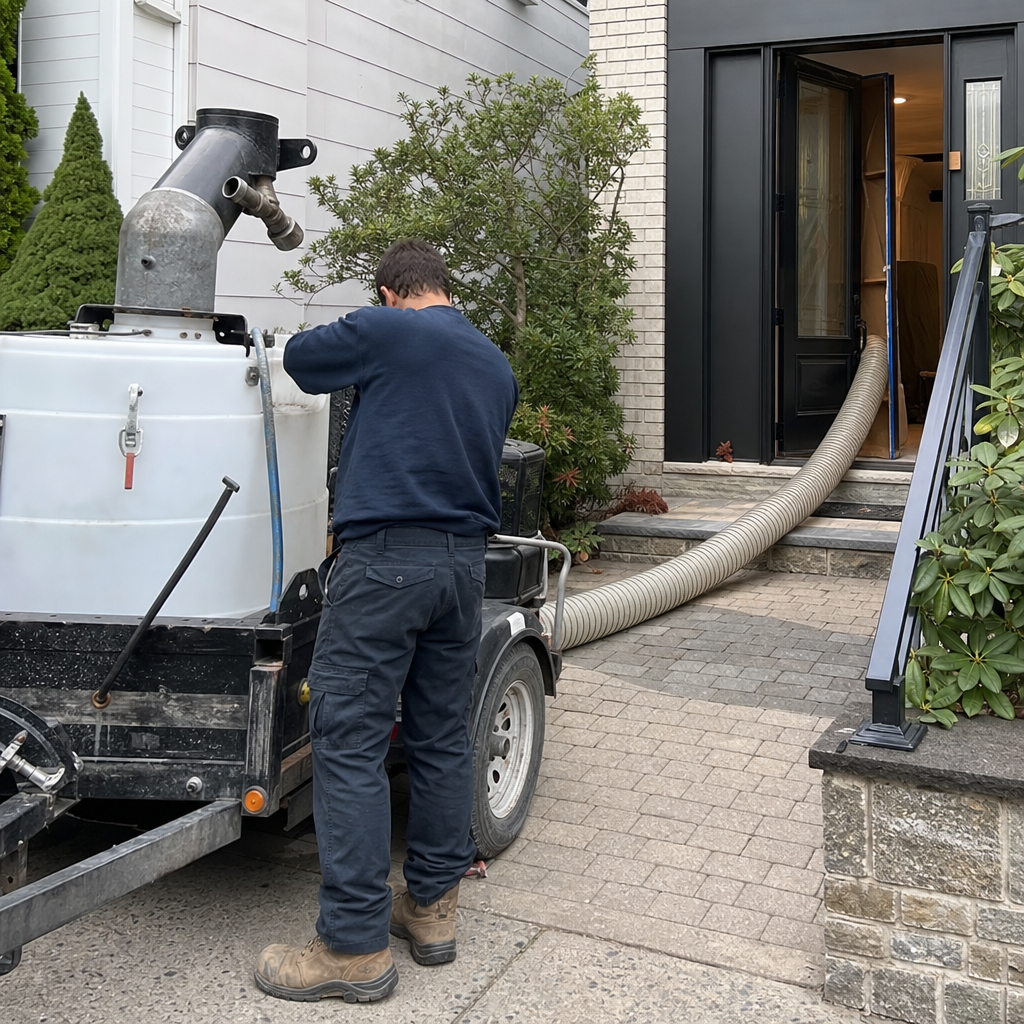
Trane Air Duct Cleaning in Brooklyn Heights, NY | Empire Air Duct Cleaning Service New York
Trane air duct cleaning in Brooklyn Heights typically runs $280–$520 for a complete residential system, with same-day scheduling available for most ZIP 11201 addresses. We’re an independent Trane service provider—not manufacturer-authorized—so we work on what your system actually needs, not what a brand manual says. Steven Ramirez, our owner and lead technician, handles every Brooklyn Heights job personally. Call (877) 542-5983 for a free estimate.
Why Brooklyn Heights Residents Choose Us for Trane Service
We’ve been cleaning Trane systems in Brooklyn Heights for eleven years, and we’ve learned what breaks here that doesn’t break in Astoria or Bay Ridge. The retrofit ductwork in these 1820s-to-1880s rowhouses and brownstones creates pressure imbalances and access problems that factory-trained techs from suburban markets simply don’t encounter.
Steven runs every job himself. He grew up in Jackson Heights watching his uncle work HVAC across the five boroughs, then trained at Queensborough Community College before building Empire one duct at a time. When you call (877) 542-5983, you’re talking to the same person who’ll show up with the Rotobrush and Nikro equipment—not a dispatcher sending a crew he’s never met.
Our 982 verified reviews averaging 4.9 stars aren’t from cherry-picked jobs. They’re from eleven years of doing one thing: air duct and indoor air quality work. We don’t bolt this onto general HVAC service. We don’t subcontract. And we don’t treat your landmarked brownstone like a spec house in a new development.
Common Trane Air Duct Cleaning Problems We Solve in Brooklyn Heights
- XV20i variable-speed blower motors overheating from BQE soot infiltration. The Brooklyn-Queens Expressway funnels diesel particulate directly into west-facing buildings, and those fine particles coat blower motors faster than standard dust. When ducts clog, the XV20i’s high-efficiency motor can’t shed heat. We’ve pulled motors running 40°F above spec in buildings on Furman Street and Pierrepont Street.
- XR16 condensate drains clogging in East River humidity. Brooklyn Heights sits low against the water, and summer humidity here runs 15–20% higher than inland Queens neighborhoods. That moisture turns condensate lines into algae incubators, especially in duct chases hidden behind original plaster. Water backs up, finds the path of least resistance, and rots century-old lath before anyone smells it.
- S9V2 flame rollout from undersized returns in retrofitted brownstones. These furnaces need precise combustion air ratios. When a single-family brownstone gets converted to two or three units and the original return path gets split with flex duct crammed through a coal chute, negative pressure pulls flame where it shouldn’t go. The limit switch trips. Homeowners reset it. We find the real problem.
- Non-standard duct fittings trapping debris in soffits built around irreplaceable millwork. Original crown molding, plaster cornices, and hand-turned newel posts can’t be replicated. Previous owners or contractors built duct soffits to preserve them, creating flat spots and sharp turns where rotary brushes bind up and shop-vac hoses lose suction.
- Cross-contamination between units in multi-family conversions. Duct systems that weren’t designed together now share pressure zones. Cleaning one unit without isolating the others just moves debris around. We seal and zone before we agitate.
Trane Service in Brooklyn Heights: What Local Conditions Mean for Your Equipment
Brooklyn Heights is New York City’s first designated historic district, packed with Federal, Greek Revival, and Italianate rowhouses and brownstones built from the 1820s through the 1880s—all originally designed for steam or hot-water radiator heat, with zero native ductwork. Any forced-air HVAC system here is a retrofit, meaning duct runs are shoehorned into closets, carved through original plaster, or concealed in soffits built around irreplaceable period millwork, creating access and cleaning challenges that simply do not exist in purpose-built duct systems elsewhere.
For Trane owners specifically, this means your XV20i or S9V2 is working harder than its engineering assumptions. The variable-speed blower in a Pierrepont Street brownstone isn’t moving air through a straight 12-inch rigid duct run in a suburban basement. It’s pushing through 8-inch flex with three 90-degree turns, past a junction box some contractor wedged into a former servant’s staircase in 1987. The motor ramps up to compensate. Draws more current. Runs hotter. Dies younger—unless the ductwork gets cleaned and sealed with someone who understands the building, not just the brand.
We recently cleaned a Trane XR16 system in a brownstone on Pierrepont Street, just three blocks from the BQE. The supply ducts were packed with diesel soot that had adhered to the flex duct lining due to East River humidity. We performed a full video inspection, then used a HEPA vacuum with rotary brush to dislodge the soot without damaging the original plaster walls.
That last part matters. Brooklyn Heights’ 19th-century brownstones have original plaster-and-lath walls; our techs must use HEPA vacuums with brush attachments to avoid damaging these irreplaceable finishes when cleaning retrofitted ductwork. A standard duct cleaning in a Sheetrock house is a different operation entirely. We don’t treat them the same.
Trane Models & Products We Service in Brooklyn Heights
We work on the full Trane residential line, with particular depth on the systems we see most in Brooklyn Heights conversions:
- Trane XV20i — Variable-speed heat pump and air handler combinations. We stock OEM blower motors and control boards; for filters and sealants, we use quality aftermarket equivalents that meet or exceed Trane spec.
- Trane XR16 — Single-stage heat pump, common in 1990s–2010s brownstone retrofits. Condensate drain kits and evaporator coil access panels are our standard carry.
- Trane S9V2 — Two-stage gas furnace, increasingly installed in deeper renovations. We source OEM heat exchangers and gas valves; for duct sealing in tight soffits, we use Nikro-compatible sealants.
- Trane XR80 — Single-stage furnace, workhorse of older conversions. Parts are widely available; we keep ignitors and flame sensors on the truck.
Our repair-vs-replace stance: if the unit’s under fifteen years and the repair gives you five-plus years of reliable service, we fix it. Beyond fifteen years with repeated failures, we’ll walk you through replacement honestly—not because it’s easier for us, but because it actually is.
Trane Service Pricing in Brooklyn Heights
Here’s what Trane air duct cleaning costs in Brooklyn Heights, based on the system type and access challenges we actually encounter:
- Standard residential duct cleaning (single-zone Trane system): $280–$380
- Multi-zone or brownstone retrofit with limited access: $380–$520
- Video inspection add-on (recommended for landmarked properties): $75–$125
- Duct sealing (per linear foot, Nikro-compatible sealant): $4–$7
- Evaporator coil cleaning (Trane-specific access): $150–$220
What drives cost: number of supply and return vents, whether ducts are rigid or flex, how many floors we’re working across, and whether we need to build custom access panels to protect original finishes. Every estimate starts with a walkthrough. Steven does these himself—no sales rep, no pressure. Call (877) 542-5983 to schedule; estimates are free.
Serving Brooklyn Heights, NY — Our Local Coverage Area
We’re based in the Brooklyn Heights area and know this community well. Use the map below to see our service coverage — if you’re nearby, we can almost certainly help.
FAQs — Trane Air Duct Cleaning in Brooklyn Heights
No permit is required for interior duct cleaning in a landmarked Brooklyn Heights property. The NYC Landmarks Preservation Commission regulates exterior alterations and visible architectural features, not mechanical maintenance inside your walls. We do recommend documenting our work with video inspection footage if you’re planning future LPC applications for other renovations—it’s useful to show what we found and how we accessed it without damaging plaster or millwork. Call (877) 542-5983 if you want us to flag anything that might affect your landmark status.
Yes, and we’ve done this exact configuration multiple times in Brooklyn Heights buildings. Coal chutes create irregular duct geometry—often oval or flattened round—that standard rotary brushes can’t navigate. We switch to Nikro’s flexible-shaft system with smaller-diameter brushes and run a pre-cleaning video inspection to map the chase before we agitate anything. The XV20i’s variable-speed blower compensates for the restricted airflow, which makes cleaning more critical, not less. Call (877) 542-5983 and we’ll walk through your specific building layout.
Buildings on Furman Street, Pierrepont Street, and the western blocks of Montague should plan on every two to three years, not the standard three-to-five. The diesel particulate load is measurably higher—we’ve compared debris samples from BQE-facing buildings versus Court Street properties three blocks east, and the difference is visible to the naked eye. If you run your Trane system year-round or have respiratory sensitivities, every eighteen months isn’t excessive. Call (877) 542-5983 for a free assessment of your current buildup.
Cleaning helps, but the full fix usually requires duct sealing plus evaporator coil treatment. Brooklyn Heights basements run humid from East River proximity, and Trane’s coil design can hold condensation in the fins if airflow’s restricted. We clean the coil with foaming agent, HEPA-vacuum the drain pan, and seal any return leaks that are pulling damp basement air past the filter. If the smell persists after that, we bring in Honeywell or Aprilaire dehumidification equipment. Call (877) 542-5983 and we’ll diagnose whether it’s a cleaning issue or an equipment issue.
It can be. If a previous cleaner dislodged debris that settled on the heat exchanger, or if they damaged flex duct in a tight soffit and created a new return air leak, the S9V2’s pressure switch and limit switch will both react. More commonly in Brooklyn Heights, the problem predates cleaning: undersized returns in a retrofitted brownstone force the furnace to overheat on longer heating cycles. We run combustion analysis and static pressure tests to separate duct problems from equipment problems. Don’t keep resetting the switch—call (877) 542-5983 and we’ll find the root cause.
Service Areas Near Brooklyn Heights
We run Trane service calls across lower Manhattan and the near Brooklyn waterfront: Gramercy Park and the East Village for prewar co-op ductwork, Hell’s Kitchen and Chinatown for high-rise and mixed-use conversions, and Hoboken and Weehawken across the river for similar Hudson-facing humidity and retrofit challenges. Same-day scheduling depends on distance and current job load—call (877) 542-5983 to check.
Book Your Trane Service in Brooklyn Heights Today
Clean ducts aren’t a luxury—they’re just what the air in your home deserves. Especially here, where BQE soot, East River humidity, and 180-year-old plaster all conspire against your Trane system working the way it was designed to.
Steven Ramirez runs every Brooklyn Heights job himself, with Rotobrush and Nikro equipment, 11 years of specialized experience, and the patience to work around your building’s irreplaceable finishes. Same-day appointments available most weekdays. Call (877) 542-5983 for your free estimate.
Written by Steven Ramirez, Owner and Lead Technician at Empire Air Duct Cleaning Service New York, serving Brooklyn Heights and the five boroughs since 2013.