
Fast, Reliable Air Quality & Sanitizing Across Chinatown
Air quality and sanitizing in Chinatown runs $280–$650 for most residential jobs, with same-day response available when you call (877) 542-5983. We know these buildings. Steven Ramirez, our owner and lead technician, has spent 11 years crawling through the narrow ventilation shafts of pre-war tenements on Mott Street, Pell Street, and the upper floors above Canal Street’s restaurant row. Our Air Quality & Sanitizing team doesn’t guess at Chinatown’s problems—we’ve measured them, pulled the grease-caked duct liners, and developed protocols specific to this neighborhood’s brutal indoor air environment.
Chinatown isn’t like other Manhattan neighborhoods. Hundreds of high-heat wok kitchens, whole-animal roasters, and live seafood processors operate within the same building blocks as residential units. That grease-laden exhaust migrates through shared vertical chase walls into ductwork that was never designed to handle it. Add the diesel soot pouring off Canal Street’s truck corridor—one of the highest diesel-traffic routes in Manhattan—and you’ve got a sanitizing challenge that standard residential cleaning simply doesn’t touch.
Why Empire Air Duct Cleaning Service New York Is Chinatown’s Preferred Air Quality & Sanitizing Company
We’ve earned our reputation in Chinatown through repeated calls from property managers on East Broadway and Grand Street who’ve fired cheaper cleaners that couldn’t solve the grease migration problem. Nearly 1,000 customers reviewed us—982 verified reviews averaging 4.9 stars—and a significant share come from repeat clients in this neighborhood who finally found a crew that understands their building’s specific ventilation pathology.
Steven runs the job himself. When you call (877) 542-5983, the person who answers is the same technician who’ll show up with our Rotobrush and Nikro equipment, assess your ductwork, and make the call on whether standard sanitizing will cut it or if you need commercial-grade degreasing. No subcontracted crew learning your building on the fly. No hand-offs. One call covers it all.
Our response time to Chinatown averages under two hours from call to arrival for urgent odor or air quality issues. We keep Honeywell and Aprilaire UV components and Guardsman sanitizing agents stocked for 10013 zip code jobs, so we’re not ordering parts while your apartment continues recirculating last night’s roast duck fumes.
11 years of one specialty. That’s the difference. Generalist HVAC companies treat duct sanitizing as an add-on. We don’t install furnaces or sell you a new AC unit—we solve the air quality problems that other companies leave behind.
Our Air Quality & Sanitizing Services in Chinatown
Odor Removal
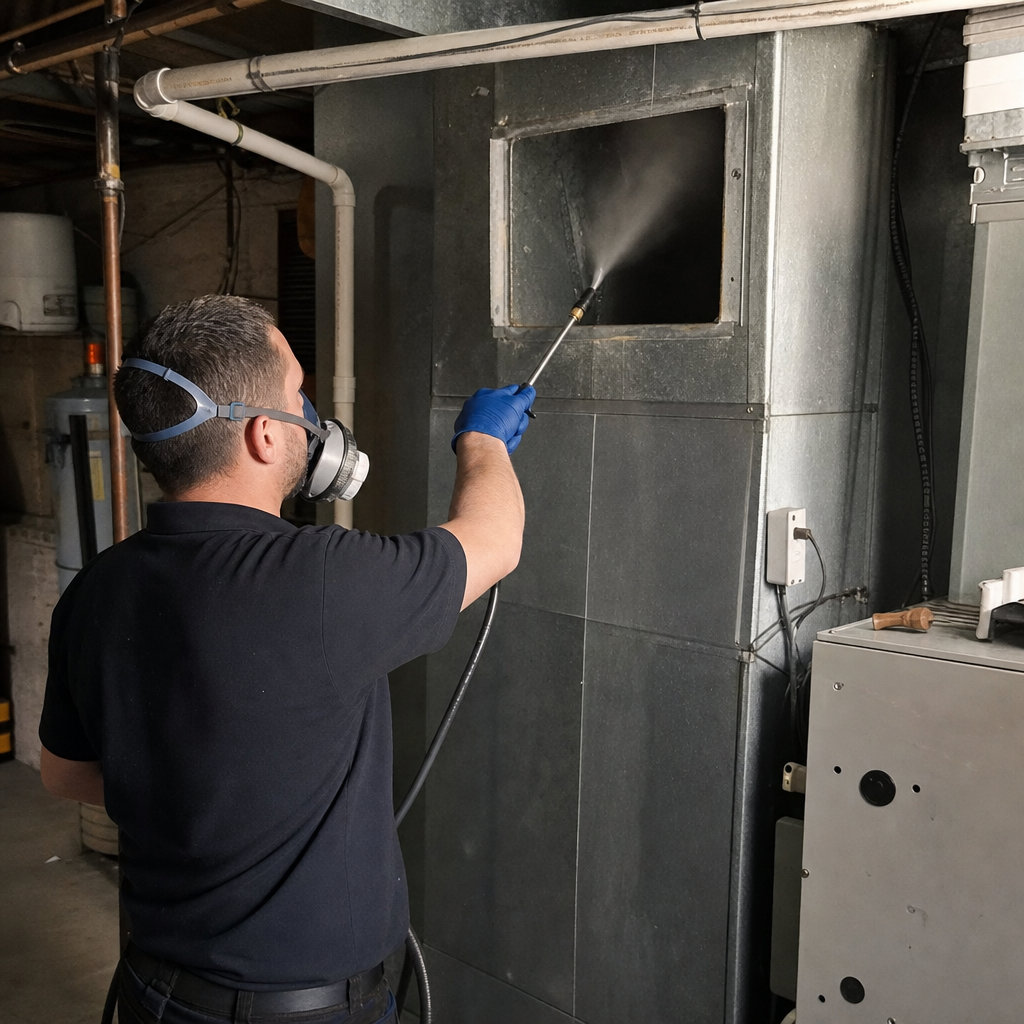
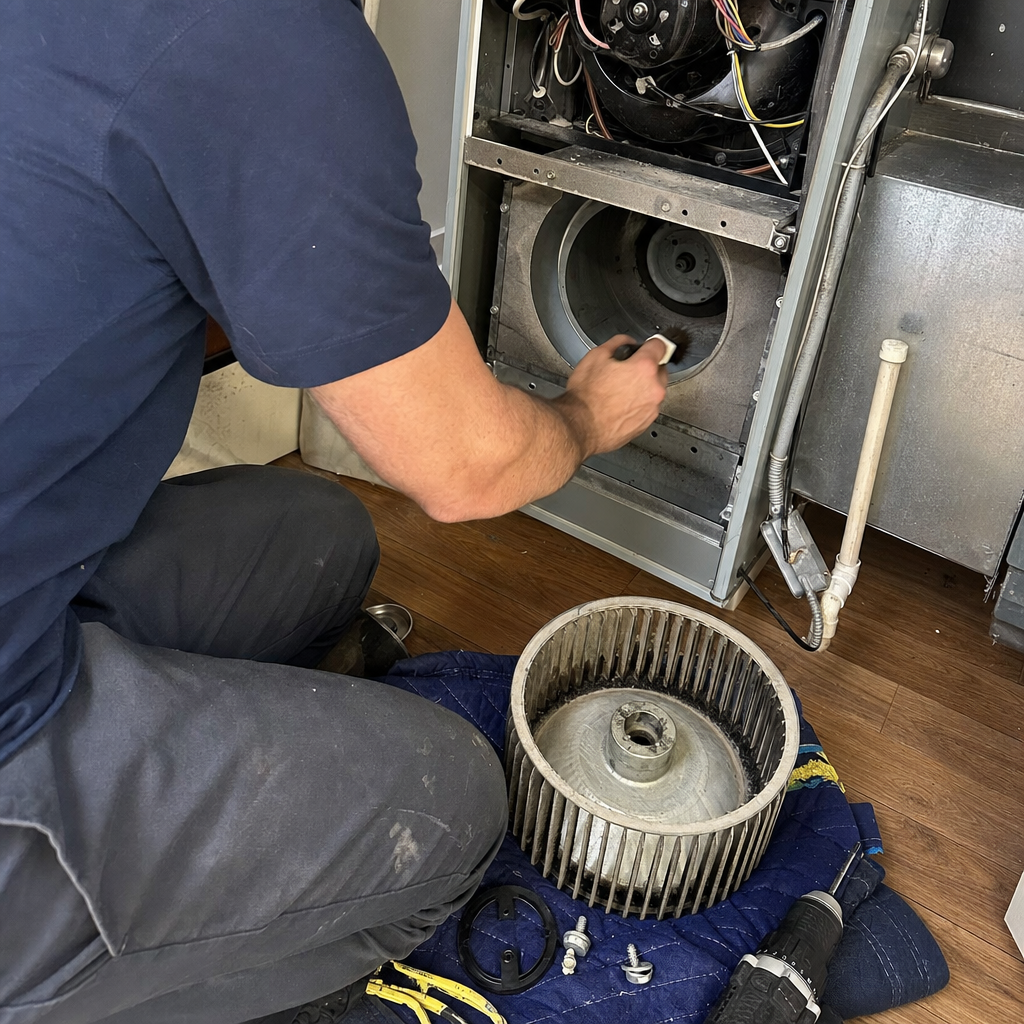
The persistent restaurant smell in your Chinatown apartment isn’t in your imagination, and it’s probably not in your carpets either. We were called to a mixed-use building on Mosco Street where a residential unit’s HVAC was recirculating the smell of char siu from the ground-floor restaurant. Our tech found the duct liner coated with a thick, brownish grease film mixed with fine soot—likely from the Canal Street truck corridor. We applied a commercial-grade degreaser and followed with a Rotobrush agitation and HEPA vacuum, then installed a UV light system on the air handler to neutralize any remaining airborne organics. Standard ozone treatments or scented masking agents fail here because they don’t remove the source. We do.
Bacteria Sanitizing
Grease deposits in pre-war ductwork don’t just smell—they breed. The combination of organic cooking fats, moisture from steam-intensive wok cooking, and the warm, stagnant conditions in Chinatown’s narrow gravity-ventilation shafts creates an ideal environment for bacterial colonization. Our bacteria sanitizing protocol in this neighborhood uses extended-contact antimicrobial agents, not quick-spray treatments. Buildings on Doyers Street and the Bowery corridor with shared kitchen exhaust systems typically need multiple commercial-grade degreasing passes before sanitizing can even be effective. We test before and after with ATP meters to verify kill rates, because in these conditions, “clean” isn’t a guess—it’s a measurement.
UV Light Installation
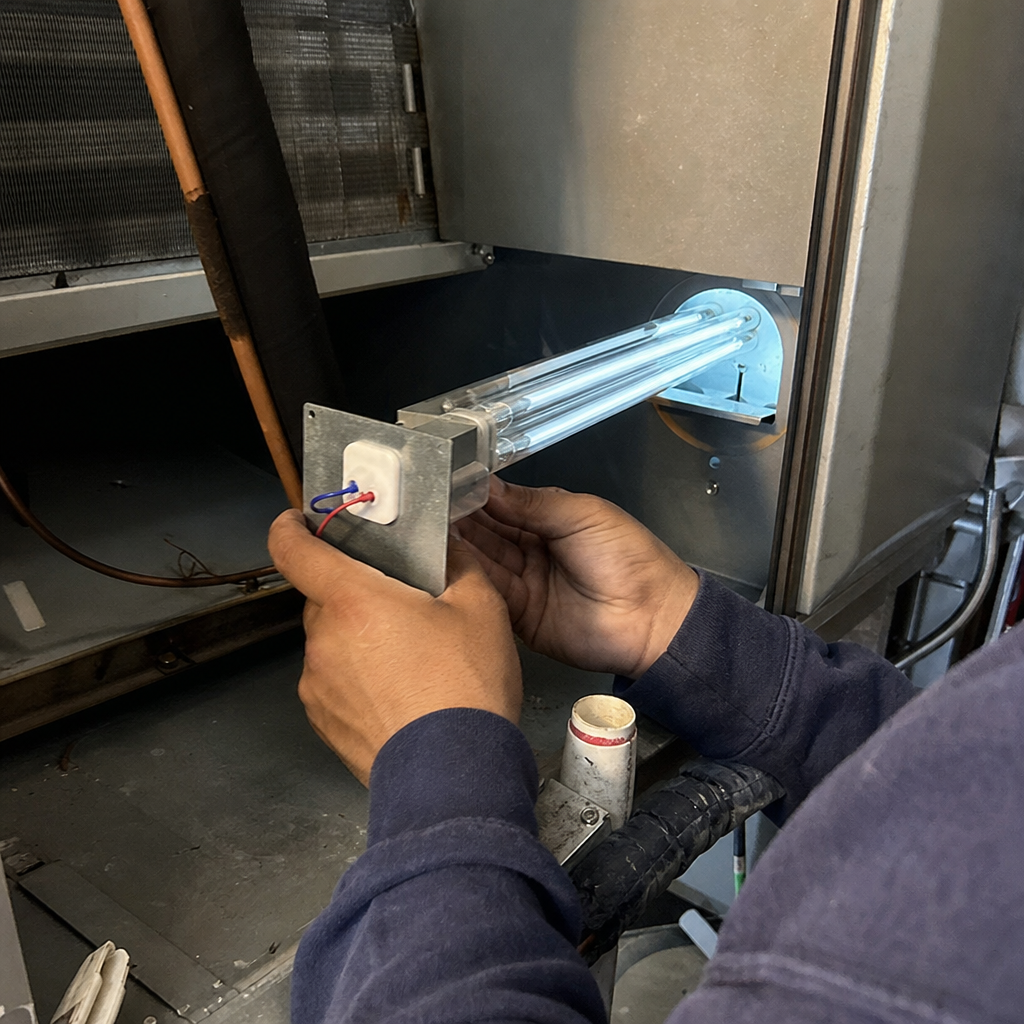
UV lights work in Chinatown, but only when properly specified for the contaminant load. The high concentration of airborne grease particulates and diesel soot in this neighborhood coats standard UV bulbs rapidly, reducing output and creating false confidence. We specify Honeywell and Abatement Technologies UV-C systems with protective sleeves and higher-output lamps rated for commercial kitchen environments—even in residential units above restaurants on Elizabeth Street or Bayard Street. Installation location matters critically in these buildings: too close to the coil and you get shadowing from grease buildup; too far and you lose effective dosage. Steven calculates exposure time based on your specific airflow CFM and duct dimensions, not a rule-of-thumb chart.
Mold Treatment
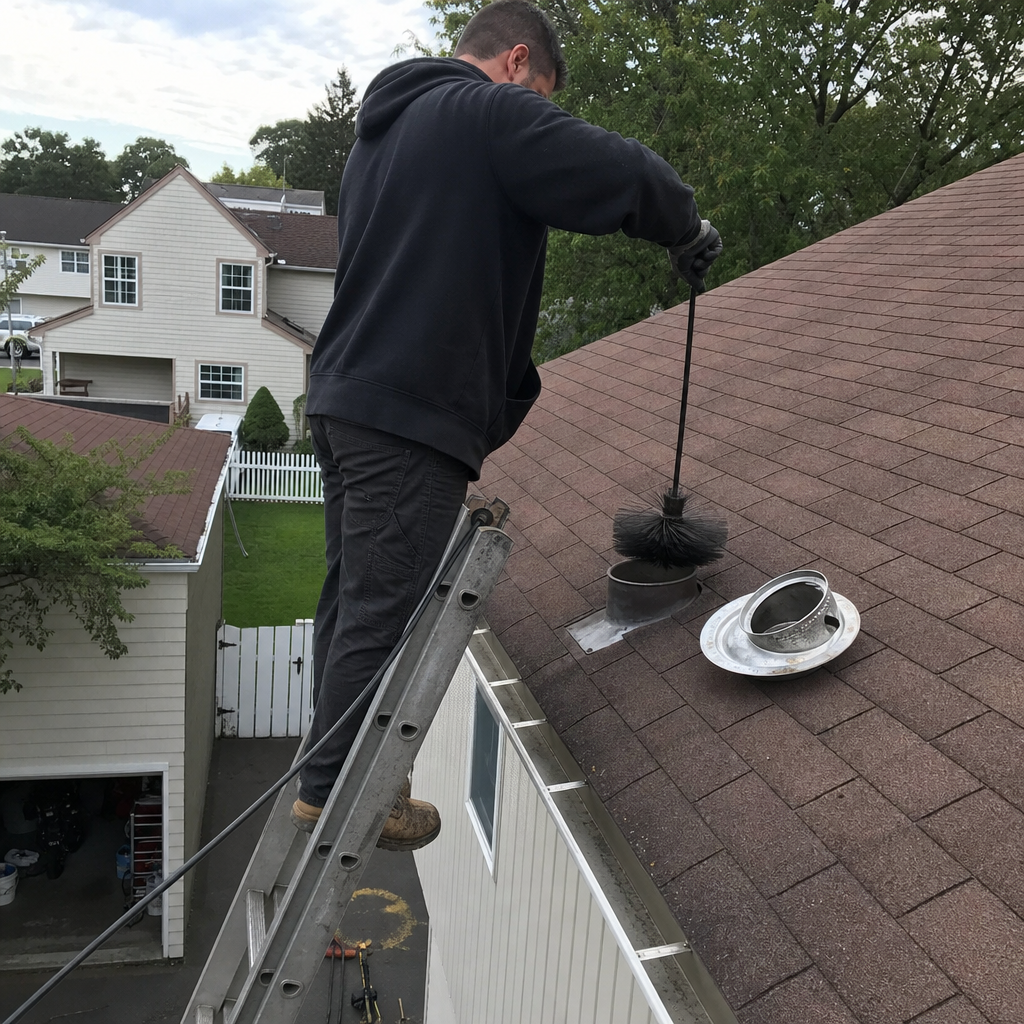
Chinatown’s pre-war tenements with their original gravity-ventilation shafts, retrofitted with mechanical HVAC components, create condensation points that newer buildings don’t have. The thermal bridging at chase wall junctions—where restaurant exhaust heat meets cooler residential duct runs—produces moisture accumulation that feeds mold growth even in apparently dry apartments. We treat the mold, but more importantly, we identify the moisture source. In buildings on Mott Street and Pell Street, we’ve found that sealing duct seams with proper mastic (not tape) and improving condensate drainage stops recurrence where repeated spray treatments failed.
Air Purifier Installation
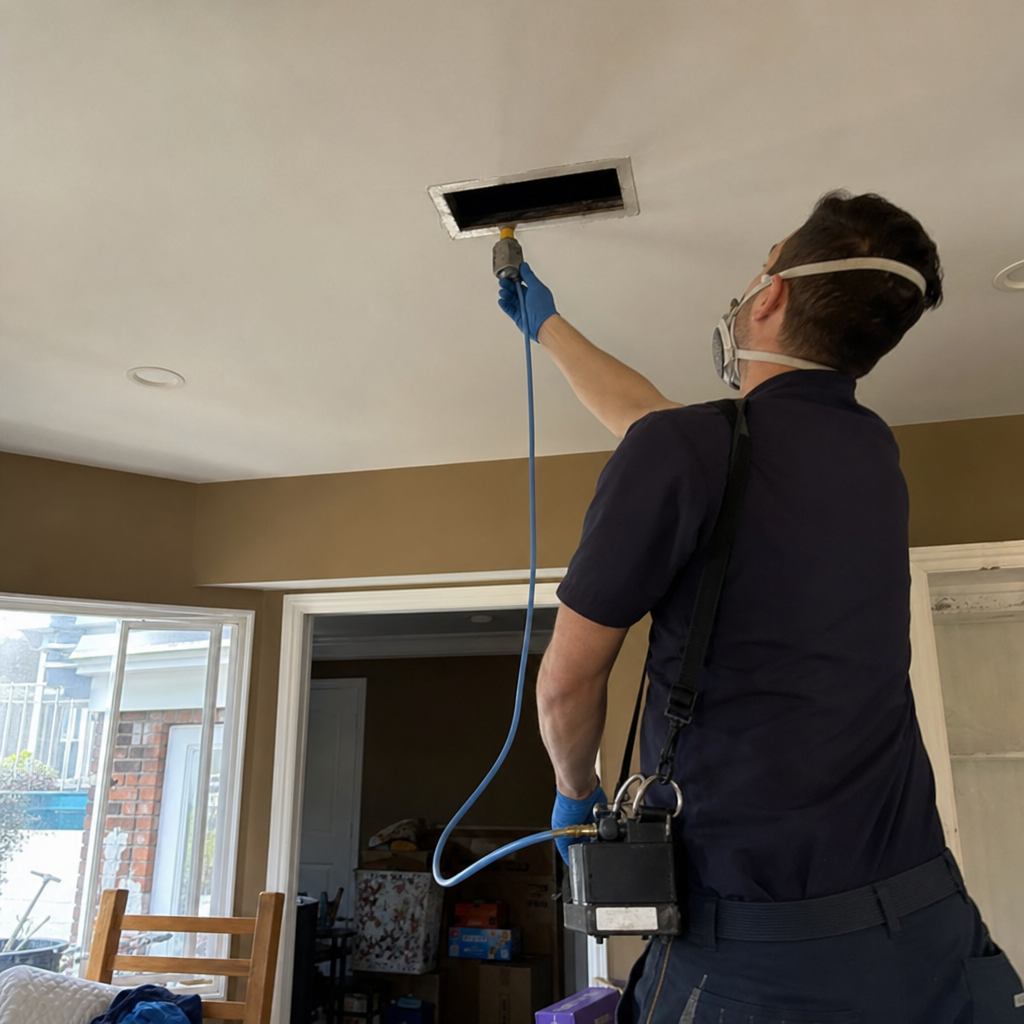
Whole-home air purifiers in Chinatown need commercial-grade pre-filtration to survive. The diesel soot from Canal Street alone will clog standard residential HEPA filters in weeks, not months. We size Aprilaire and Honeywell systems with MERV 13+ pre-filters and carbon stages rated for VOC absorption from cooking oils. For ground-floor and second-floor units on the north side of Canal Street, we regularly recommend activated carbon deep-beds that technicians in suburban markets would consider overkill. They’re not overkill here. They’re necessary.
Allergen Reduction
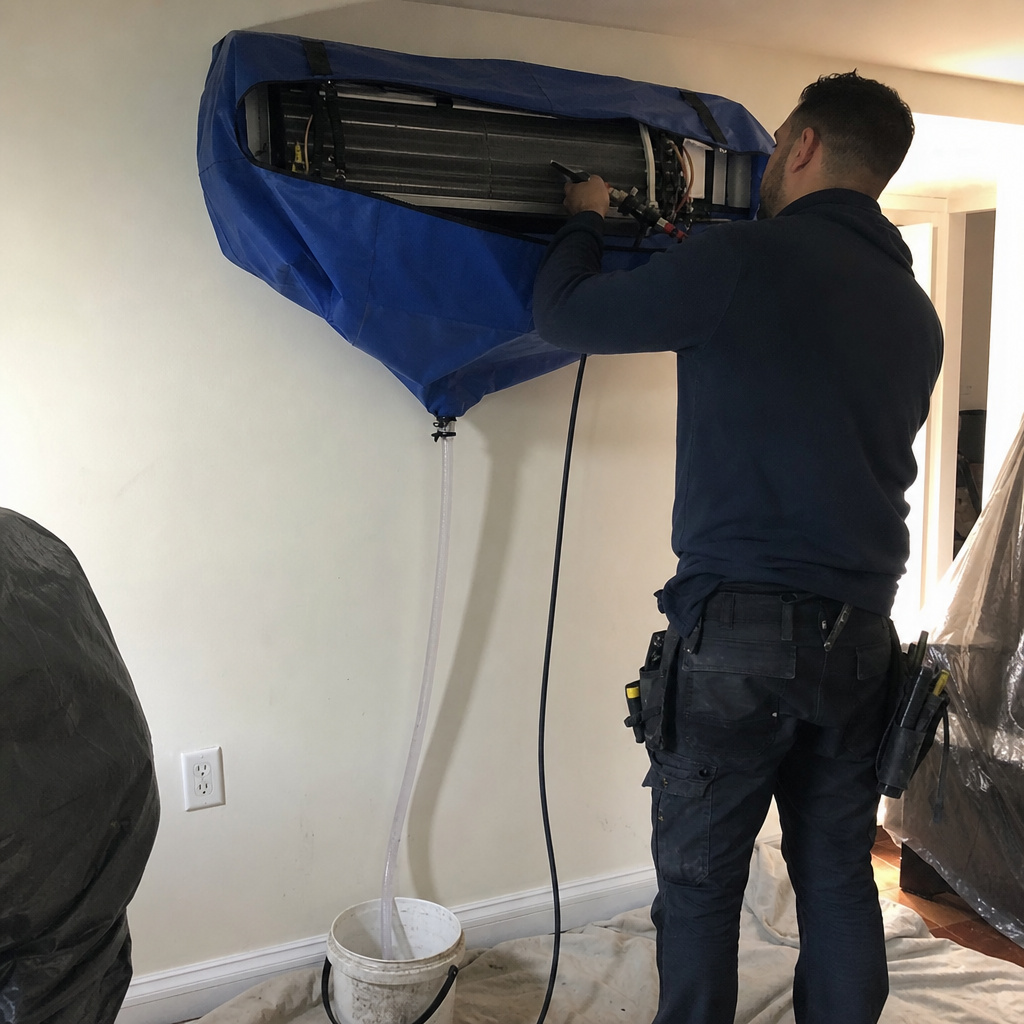
The allergen load in Chinatown combines standard urban triggers with neighborhood-specific particulates: fine fish protein aerosols from seafood processing, char particulates from open-flame roasting, and the diesel PM2.5 from truck traffic. Standard allergen reduction protocols miss these. Our process includes HEPA vacuuming of the full duct run, not just accessible registers, followed by contact-time sanitizing and—critically—sealing access points where grease-laden air infiltrates from shared chases. For tenants in converted loft buildings on Centre Street, we’ve found that allergen reduction without grease source control is temporary at best.
What happens when you call
- 1
A real person answersNo phone trees — you reach a local pro.
- 2
You get an upfront price rangeHonest numbers before anyone is dispatched.
- 3
A background-checked tech heads outLicensed & insured, dispatched right away.
- 4
You approve before work beginsNothing starts until you say go.
Trusted Brands We Service in Chinatown
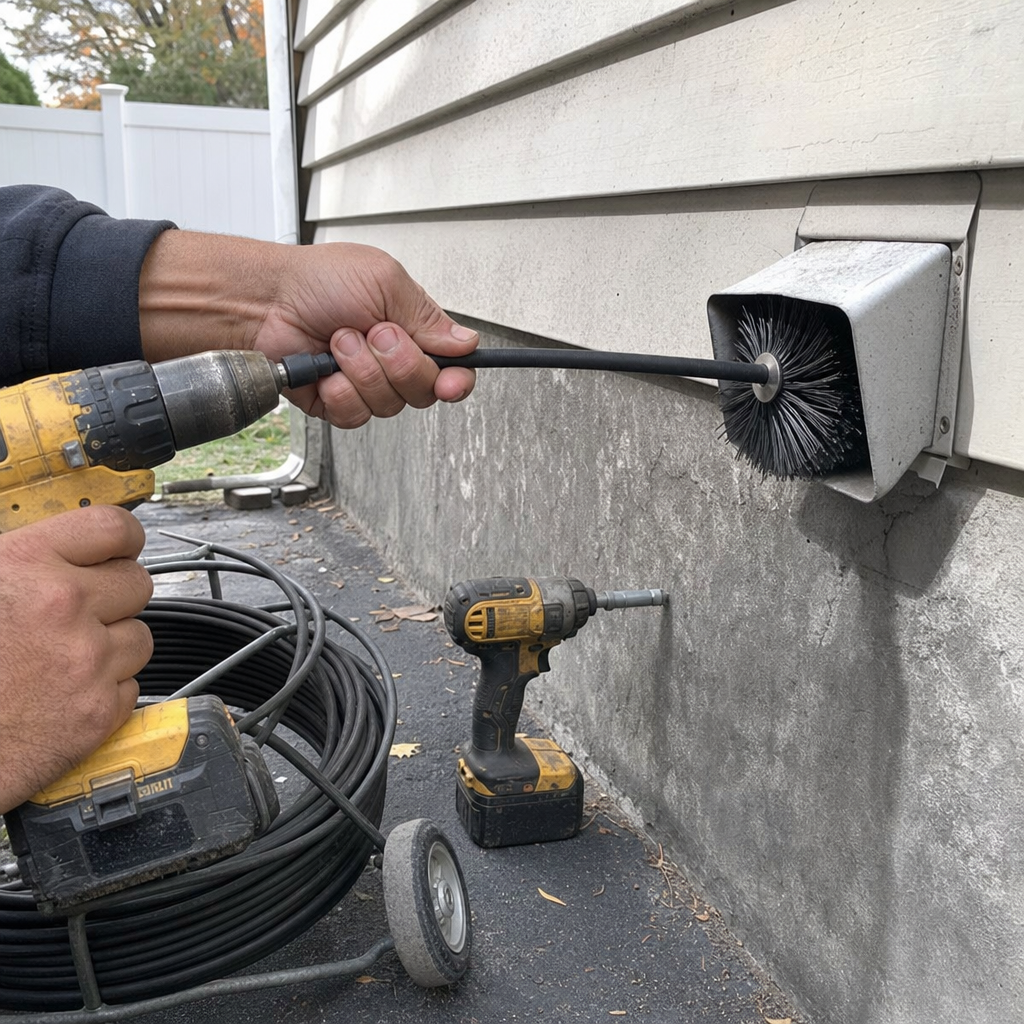
We deploy Rotobrush rotary-brush systems and Nikro HEPA vacuums for the mechanical cleaning that Chinatown’s grease-compacted ductwork demands—equipment rated for commercial jobs that we use in residential tenements because anything lighter fails. For sanitizing and air quality hardware, we install and service Honeywell UV systems, Aprilaire filtration and purification units, and Guardsman antimicrobial treatments. We stock replacement UV bulbs, filters, and treatment chemicals for 10013 zip code customers, so follow-up maintenance doesn’t wait on shipping. When a restaurant exhaust intrusion recurs or Canal Street soot loads spike, our Chinatown clients get same-day parts, not next-week promises.
Common Air Quality & Sanitizing Problems We See in Chinatown Homes
- Restaurant exhaust infiltrating residential ducts through shared vertical chase walls. The mixed-use conversion of pre-war tenements created direct pathways between ground-floor kitchen hoods and upper-floor HVAC returns. Standard cleaning removes surface debris; it doesn’t seal these infiltration points or degrease the accumulated film inside the duct.
- Diesel soot from Canal Street truck traffic clogging intake filters and coating duct interiors. Technicians working buildings on the north side of Canal Street regularly pull filters and duct liners coated with diesel soot dark enough to be mistaken for fire damage. This isn’t ordinary dust—it’s oily, hydrophobic, and resists standard vacuuming without solvent pre-treatment.
- Legacy grease deposits in pre-war ductwork requiring multiple commercial-grade degreasing passes. The 1890s–1930s building stock in Chinatown wasn’t designed for mechanical ventilation, and retrofit duct runs have low spots and rough interior surfaces where grease pools and polymerizes over years. One-pass cleaning leaves active contamination behind.
- UV light inefficiency due to rapid soot and grease coating of bulbs. Customers who installed UV systems through generalist HVAC contractors often find them ineffective in Chinatown’s contaminant load. We specify higher-output lamps with protective sleeves and establish realistic maintenance intervals—typically 6 months, not the 12–18 months standard in cleaner environments.
Pricing for Air Quality & Sanitizing in Chinatown, NY
| Service | Typical Range in Chinatown |
|---|---|
| Bacteria sanitizing (standard residential) | $280–$420 |
| Odor removal with commercial degreasing | $380–$650 |
| UV light installation (single unit) | $450–$780 |
| Mold treatment (localized, under 50 sq ft duct area) | $520–$890 |
| Full air purifier install (whole-home) | $1,200–$2,400 |
| Allergen reduction with HEPA cleaning | $320–$480 |
Chinatown jobs run toward the higher end of these ranges when commercial-grade degreasing is required—typically for units above active restaurant kitchens or within a block of heavy Canal Street traffic. The additional labor and specialized chemistry are non-negotiable; skipping them produces temporary results that fail within weeks. We quote upfront after inspection, not after you’ve committed. Estimates are free. Call (877) 542-5983 for exact pricing on your building.
We Also Serve Cities Near Chinatown
Our service radius covers the full downtown Manhattan core. We regularly perform air quality and sanitizing work in New York City broadly, throughout Manhattan, and in adjacent neighborhoods including the Financial District and East Village. Each area gets the same owner-led service, but Chinatown’s specific restaurant-density and traffic-corridor challenges remain our most technically demanding local market.
Serving Chinatown, NY — Our Local Coverage Area
We’re based in the Chinatown area and know this community well. Use the map below to see our service coverage — if you’re nearby, we can almost certainly help.
FAQs — Air Quality & Sanitizing in Chinatown
Standard duct cleaning removes loose debris but doesn’t dissolve the polymerized grease film that coats duct liners in buildings with shared restaurant exhaust. We apply commercial-grade degreasers with extended contact time, followed by mechanical agitation with Rotobrush systems, to break down the actual source of the odor. Call (877) 542-5983 for an inspection—estimates are free.
Yes, but only as part of a complete protocol. UV-C light neutralizes airborne organic compounds and suppresses bacterial growth on wet coils, but it won’t remove existing grease deposits. We install Honeywell UV systems after thorough degreasing, positioning them for maximum exposure time based on your airflow. The combination—remove the source, then prevent recurrence—is what works in Chinatown’s conditions.
Every 12–18 months for units with direct chase-wall exposure to active kitchen exhaust; every 24 months for units with indirect exposure or effective sealing. We assess your specific building’s infiltration pathways during the first service and recommend an interval based on measured grease accumulation rates, not a calendar guess.
Often both. We test particulate composition on-site. The Canal Street corridor deposits diesel soot that’s oily and metallic-smelling; restaurant grease is tacky and carries distinct organic signatures. Knowing the ratio determines whether we lead with solvent degreasing or particulate extraction. Buildings on the north side of Canal Street typically show 60–80% diesel soot; interior blocks closer to Mott Street show higher grease percentages.
Yes. Our Nikro HEPA vacuums and Rotobrush systems use flexible shafts and reduced-diameter brush heads specifically for the 6-inch and 8-inch retrofitted duct runs common in Chinatown’s pre-war stock. We also carry portable borescope cameras to inspect chase-wall junctions that are inaccessible by standard means. Steven Ramirez has developed custom access protocols for several buildings in the 10013 zip code where conventional equipment simply won’t fit.
Written by Steven Ramirez, Owner and Lead Technician at Empire Air Duct Cleaning Service New York, serving Chinatown and downtown Manhattan since 2013.