
Last updated July 10, 2026
The Complete Guide to Air Duct Cleaning in New York City
Here’s something most duct cleaning companies won’t tell you: the majority of New York City apartments were built decades before central forced-air systems even existed. When HVAC was retrofitted into pre-war buildings, installers had to thread flexible ductwork through walls never designed for it—creating sharp bends, compressed runs, and dead zones that trap debris at rates suburban cleaning guides completely fail to address. In this guide, you’ll learn how NYC’s unique building stock, subway particulate infiltration, and co-op governance structures change everything about when, how, and by whom your ducts should be cleaned.
Quick Answer
Professional air duct cleaning in New York City typically costs $400–$900 for residential units and $1,200–$3,500 for commercial systems, with most Manhattan and Brooklyn appointments completed in 3–5 hours. Because NYC buildings face accelerated contamination from pre-war duct geometry, subway particulate, and urban PM2.5, we recommend cleaning every 2–3 years rather than the standard 5-year national guideline. Empire Air Duct Cleaning Service New York offers free estimates—call (877) 542-5983.
Table of Contents
- Why NYC Building Construction Creates Unique Duct Contamination
- How Subway Particulate and Urban PM2.5 Accelerate Duct Contamination
- Co-op and Condo Board Rules: What to Know Before You Schedule
- Residential vs. Commercial Duct Cleaning in Mixed-Use NYC Buildings
- How to Read a Legitimate Duct Inspection Report
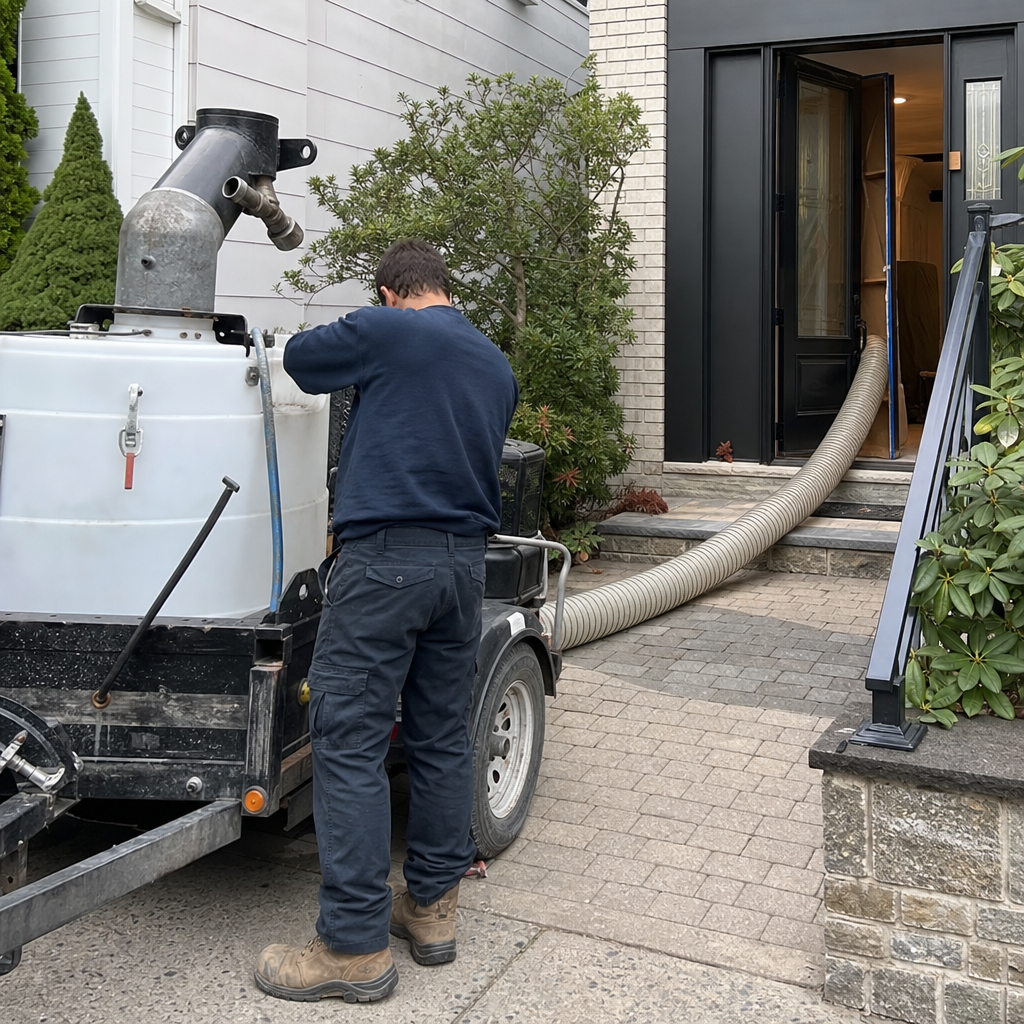
- What Professional Duct Cleaning Actually Looks Like
- Air Duct Cleaning Costs in New York City
- How Often Should NYC Buildings Get Duct Cleaning?
Why NYC Building Construction Creates Unique Duct Contamination
Walk into a Park Slope brownstone or a Gramercy Park co-op, and you’re stepping into a building whose walls were designed for coal heat or radiator steam—not forced air. When central HVAC arrived in the 1960s and 70s, installers faced a problem: no chases, no plenum space, no straight runs. Their solution was flexible ductwork threaded through existing wall cavities, often with multiple 90-degree bends to navigate structural elements that couldn’t be moved.
Here’s what that means for contamination:
- Compressed flex duct reduces airflow velocity, causing particles to settle rather than reach filters
- Sharp horizontal bends create debris accumulation points that rotary brushes must navigate carefully—too aggressive and you damage the duct; too gentle and you leave material behind
- Dead zones at termination points in pre-war buildings often sit above original plaster ceilings, where decades of previous renovations have left construction debris
- Shared wall cavities between units can allow cross-contamination when neighboring ducts leak
In our 11 years of exclusive air duct and indoor air quality work across New York City, we’ve found that pre-war buildings in neighborhoods like the Upper West Side, Greenwich Village, and Brooklyn Heights typically require 40–60% more cleaning time per linear foot than post-war construction. The ductwork simply holds more debris in more places, and accessing it without damaging original finishes demands slower, more deliberate technique.
Post-war buildings—think Midtown high-rises from the 1950s and 60s—fare somewhat better. Their concrete construction and purpose-built HVAC chases allow straighter duct runs. But they introduce their own issue: galvanized steel ductwork in these buildings corrodes differently than modern aluminum, producing oxide flakes that mix with dust to form a stubborn, clay-like deposit.
Steven runs the job himself on every project, and he’s developed specific brush protocols for each building era. Empire Air Duct Cleaning Service New York uses Rotobrush and Nikro systems precisely because their variable-speed rotary heads can be calibrated for fragile flex duct in pre-war buildings and more aggressive settings for post-war steel.
How Subway Particulate and Urban PM2.5 Accelerate Duct Contamination
New York City’s subway system moves 3.2 million riders daily—and generates a constant plume of iron oxide particles, brake dust, and carbon residue that vents at street level and below. For ground-floor apartments, basement units, and any building within two blocks of a subway vent or station entrance, this isn’t abstract environmental concern. It’s material entering your ductwork.
We see the evidence directly. In ground-floor units along Lexington Avenue in the East 20s, or near the 1/2/3 lines on Broadway in the West 70s, supply registers show distinctive black metallic staining that doesn’t appear above the second floor. This is subway particulate—magnetite and hematite oxides with particle sizes small enough to pass standard fiberglass filters and accumulate in duct interiors.
Urban PM2.5 compounds the problem. New York City’s annual average fine particulate concentration runs 8–12 μg/m³, roughly double the EPA’s aspirational target and significantly higher than most suburban markets. These particles infiltrate buildings through:
- Negative pressure differentials when exhaust fans and range hoods pull make-up air through envelope gaps
- Window and door leakage in older buildings with original sash windows or poorly sealed terrace doors
- Outdoor air intakes positioned at street level, common in commercial HVAC and increasingly in residential systems
The result: ducts in New York City buildings accumulate a distinctive “urban grime” layer—fine, oily, and tightly adhered—that differs from the dry, fluffy dust typical of suburban systems. Standard vacuum extraction alone won’t remove it. Our approach combines mechanical agitation with targeted application of Guardsman-approved cleaning agents where appropriate, followed by thorough rinse extraction using Nikro high-velocity vacuum systems.
For buildings near major thoroughfares—FDR Drive, the West Side Highway, or Queens Boulevard—we’ve also documented elevated hydrocarbon deposits in return ducts, particularly in units facing the street. These require modified cleaning protocols and, in some cases, post-cleaning air quality verification using Honeywell monitoring equipment.
Co-op and Condo Board Rules: What to Know Before You Schedule
Nothing halts a duct cleaning project faster than a building superintendent refusing basement access because the board wasn’t notified. In New York City’s co-op and condo market—where roughly 75% of Manhattan residential units are in such buildings—governance structures create procedural requirements that don’t exist in single-family home markets.
Co-op buildings typically require:
- Board approval for any work affecting building systems, including shared HVAC components
- Certificate of insurance naming the building corporation as additional insured (we carry this standard; no specific policy numbers are on file)
- Scheduling coordination with building maintenance staff for access to mechanical rooms, roof equipment, or basement trunk lines
- Notification to neighbors in adjacent units when shared ductwork will be cleaned
Condo buildings vary more widely. Some function similarly to co-ops with active boards; others operate more like rental buildings with minimal oversight. The critical question: who owns the ductwork? In many NYC condos, the association owns everything behind the walls, while owners control registers and exposed grilles. This determines whether you need board approval for full-system cleaning or can proceed independently with branch-line service.
We’ve navigated these structures across hundreds of New York City buildings. In Gramercy Park, for instance, the Gramercy Park Board requires 10-day advance notice and specific access windows. In pre-war co-ops along Central Park West, building staff often insist on escorting technicians and may limit equipment size due to elevator constraints.
Before scheduling, we recommend confirming:
- Your building’s specific notification and approval requirements
- Whether your unit’s ductwork is individually served or part of a shared riser system
- Access protocols for mechanical rooms, roof areas, or basement utility spaces
- Any restrictions on equipment size, cleaning agent use, or work hours
One call covers it all at Empire Air Duct Cleaning Service New York—we handle board documentation and building coordination as standard practice, not an add-on fee.
Residential vs. Commercial Duct Cleaning in Mixed-Use NYC Buildings
New York City’s zoning and development patterns create a building type rare in other markets: vertical mixed-use, with retail or restaurant space below and residential units above, all sharing a single address and often interconnected building systems. The diner on the ground floor of your Brooklyn walk-up? Its grease-laden exhaust may share wall cavities with your residential supply ducts. The dry cleaner in your Midtown building’s retail base? Perchloroethylene vapors have been documented migrating through shared construction gaps into residential HVAC.
This matters for duct cleaning scope and methodology:
| Factor | Pure Residential | Mixed-Use / Commercial-Adjacent |
|---|---|---|
| Primary contaminant | Dust, skin cells, pet dander | Grease particulate, chemical vapors, carbon monoxide risk |
| Cleaning frequency | Every 2–3 years | Annually for commercial; residential every 1–2 years |
| Equipment required | Rotobrush residential systems | Nikro commercial-grade HEPA extraction, possible chemical degreasers |
| Code considerations | Standard NYC Building Code | FDNY fire suppression coordination, DOHMH ventilation requirements |
| Access complexity | Unit-level only | Roof exhaust fans, shared plenums, fire damper inspection |
In buildings with commercial kitchens below residential units, we’ve found that return air pathways often show elevated grease deposition even when the residential ducts themselves appear clean. This requires cleaning the return pathway, not just supply lines, and occasionally coordinating with the commercial tenant’s hood cleaning schedule.
Property managers in mixed-use buildings face particular challenges. Different lease structures may assign HVAC maintenance responsibility differently—some commercial tenants maintain their own systems, others rely on building management. Before scheduling residential duct cleaning in these buildings, we verify whether commercial exhaust systems have been maintained, as cross-contamination from neglected commercial systems can rapidly recontaminate freshly cleaned residential ducts.
How to Read a Legitimate Duct Inspection Report
New York City’s dense market attracts operators who’ve made bait-and-switch an art form. The playbook: offer a $99 “whole house” special, arrive with a camera, show horrifying photos of “your” ducts, then upsell to a $2,000 “complete restoration.” The photos are often stock images. The contamination is exaggerated. The work, when performed, is superficial.
After 11 years of one specialty and nearly 1,000 customers reviewed us, we’ve learned to help clients distinguish legitimate inspection documentation from scare tactics.
A legitimate report includes:
- Timestamped, geotagged photographs with your specific register configuration visible—not generic duct shots that could be from any building
- Linear footage measurements of each duct run, with contamination rated by zone (mild/moderate/severe) rather than a blanket “critical” designation
- Before and after images from the same camera angle, with consistent lighting—manipulated lighting (dark before, bright after) is a classic deception
- Specific contaminant identification: dust accumulation depth in millimeters, visible mold species if present (with lab confirmation noted), foreign object inventory
- Equipment specifications for proposed cleaning: vacuum CFM rating, brush type and diameter, HEPA filtration efficiency
Red flags in inspection reports:
- Photos showing standing water or “black mold” without moisture source identification—genuine mold in NYC ducts is rare without an active leak
- Pressure to decide immediately based on “health emergency” framing
- Refusal to provide written estimate before work begins
- No mention of access limitations or building-specific constraints—every NYC building has some
We use Rotobrush and Nikro inspection cameras with built-in measurement scales, and Steven provides written estimates with no time-pressure tactics. Our 982 reviews at a 4.9-star rating reflect this approach: document accurately, price transparently, perform thoroughly.
What Professional Duct Cleaning Actually Looks Like
Understanding the actual process helps you evaluate whether a contractor is performing legitimate work or running a vacuum hose around your registers and calling it done. Here’s what Empire Air Duct Cleaning Service New York performs on a typical residential job in New York City:
Step 1: System assessment and protection
We inspect the full HVAC system, identify access points, and protect flooring and furnishings. In NYC’s smaller apartments, this means careful furniture positioning and drop cloths over original hardwood or terrazzo that can’t be easily replaced.
Step 2: Register and grille removal
All supply and return registers come off for individual cleaning. We document condition—many pre-war buildings have original cast iron or brass registers that require gentle handling.
Step 3: Mechanical agitation
Rotobrush rotary brush systems navigate duct interiors, dislodging adhered debris. Brush diameter and stiffness are selected for your duct type: soft poly for flex duct, stiffer nylon for metal. Speed is controlled to prevent duct damage in tight bends common in NYC retrofits.
Step 4: Negative pressure extraction
Nikro high-velocity vacuum systems, typically 5,000+ CFM for residential, create suction that captures dislodged material before it escapes into your living space. HEPA filtration on exhaust prevents recontamination.
Step 5: Component cleaning
Blower fan, evaporator coil (where accessible), and plenum receive targeted cleaning. In NYC’s humid summers, coil cleanliness directly impacts cooling efficiency and mold prevention.
Step 6: Sanitizing (when indicated)
For systems with odor issues or post-renovation contamination, we apply EPA-registered sanitizers using Abatement Technologies application equipment. This is not routine for every job—it’s a targeted intervention based on inspection findings.
Step 7: Reassembly and verification
Registers reinstalled, system powered on, airflow verified at each outlet. We run the system through a complete cycle to confirm normal operation before leaving.
Typical duration for a 1–2 bedroom NYC apartment: 3.5–4.5 hours. Larger units or those with complex duct geometry may extend to 6 hours.
Air Duct Cleaning Costs in New York City
Pricing in New York City reflects genuine cost differences from national markets: higher labor costs, parking and access challenges, building coordination time, and the complexity factors discussed above. Here’s what you should expect:
| Service Scope | Typical NYC Range | Factors Affecting Price |
|---|---|---|
| Studio / 1-bedroom apartment | $350–$550 | Duct linear footage, register count, access difficulty |
| 2-bedroom apartment | $450–$750 | Pre-war vs. post-war construction, shared vs. individual system |
| 3+ bedroom / townhouse | $650–$1,200 | Multiple floors, basement trunk lines, custom register restoration |
| Small commercial (retail, restaurant) | $800–$2,000 | Grease loading, hood integration, FDNY compliance documentation |
| Mid-size commercial (office, medical) | $1,500–$3,500 | After-hours scheduling, HEPA verification requirements, Aprilaire system integration |
| Dryer vent cleaning (add-on) | $150–$300 | Run length, number of bends, roof vs. wall termination |
| Duct repair / sealing | $200–$800 per section | Accessibility, material type, mastic vs. mechanical sealing |
Be wary of pricing significantly below these ranges. The $99–$149 specials common in NYC marketplaces typically cover register vacuuming only, not full system cleaning. True negative-pressure duct cleaning with professional equipment cannot be performed at profit at those prices—the difference comes from skipped steps, unskilled labor, or upsell pressure.
Empire Air Duct Cleaning Service New York provides upfront pricing based on inspection, with no hidden charges for building access coordination or standard parking. Call (877) 542-5983 for a free estimate specific to your building.
How Often Should NYC Buildings Get Duct Cleaning?
National guidelines suggest 3–5 years for residential duct cleaning. In New York City, we recommend compressing that timeline based on specific risk factors present in this market.
Clean every 2 years if you have:
- Ground-floor or basement unit near subway lines
- Pre-war construction with retrofit ductwork
- Recent renovation (construction dust lingers in NYC’s tight building envelopes)
- Pets (dander accumulation accelerates in smaller NYC apartments)
- Occupants with asthma or allergies
Clean every 3 years if you have:
- Post-war building with purpose-built HVAC
- Upper-floor unit away from major pollution sources
- No pets, no recent construction, no respiratory sensitivities
Clean annually if you have:
- Commercial kitchen exhaust sharing building cavities
- Documented mold or moisture issues
- Recent fire or smoke damage
- Integrated air quality system (Aprilaire or Honeywell whole-house units) requiring coordinated maintenance
These frequencies assume standard 1″ fiberglass filter maintenance. Upgrading to pleated media or electronic air cleaners can extend intervals, but doesn’t eliminate the need for periodic mechanical cleaning—particularly in NYC’s contamination-rich environment.
Common Mistakes to Avoid
- Hiring based on lowest price alone. In New York City’s saturated market, unsustainably low pricing signals corner-cutting. We’ve been called to redo “cleanings” where the previous contractor never accessed the main trunk line.
- Ignoring building access requirements. Showing up without board approval or proper insurance documentation wastes everyone’s time and may incur building fines. We handle this coordination; budget operators often don’t.
- Cleaning without addressing the source. If your ducts are contaminated by a roof leak or disconnected bathroom exhaust, cleaning alone solves nothing until the moisture source is fixed. We identify these conditions during inspection.
- Using the wrong filter after cleaning. A freshly cleaned system with a cheap fiberglass filter recontaminates rapidly in NYC’s particle-rich air. We specify appropriate filtration for your building’s exposure.
- Neglecting dryer vents. In NYC’s smaller apartments, dryers often have long, bent vent runs to reach exterior walls. These clog faster than ducts and present genuine fire hazards—yet many “duct cleaning” specials exclude them entirely.
- Expecting duct cleaning to fix HVAC mechanical problems. Poor airflow from a failing blower motor or collapsed flex duct won’t be solved by cleaning. Our inspection distinguishes contamination issues from mechanical failures requiring repair.
- Scheduling during peak cooling season without contingency. In July and August, losing AC for even a day in a New York City apartment is untenable. We schedule buffer time for unexpected access issues and can coordinate with your building’s mechanical staff.
When to Call a Professional
Call for inspection if you notice visible dust emission from registers, persistent musty odors when the system runs, uneven heating or cooling across rooms, or if it’s been more than 3 years since last service. After any renovation—particularly in New York City’s older buildings where plaster and lead paint disturbance is likely—duct inspection is prudent before occupying.
Property managers in mixed-use buildings should establish annual commercial exhaust inspection and coordinate residential duct cleaning accordingly. Co-op and condo boards benefit from periodic building-wide assessment, particularly for shared riser systems.
Empire Air Duct Cleaning Service New York offers free estimates in New York City—call (877) 542-5983. Steven runs the job himself, and 11 years of exclusive focus on air duct and indoor air quality work means we recognize conditions specific to this city’s building stock that generalist HVAC companies miss.
Frequently Asked Questions
Residential duct cleaning in New York City typically ranges from $350 for a studio to $1,200 for a large townhouse, with most 1–2 bedroom apartments falling between $450–$750. Commercial systems start around $800 and scale based on kitchen grease loading, access complexity, and required documentation. Call (877) 542-5983 for a free estimate specific to your building—estimates are free and include full inspection.
Duct cleaning can reduce circulating allergen load if your system contains significant dust, pet dander, or mold reservoirs, but it’s not a standalone allergy treatment. In New York City’s pollen-heavy spring and fall seasons, we often combine duct cleaning with upgraded filtration (Aprilaire media filters or Honeywell electronic air cleaners) for more comprehensive relief. The improvement is most noticeable for occupants with dust mite or pet allergies when ducts were genuinely contaminated.
Most residential jobs in New York City apartments take 3–5 hours, with pre-war buildings typically requiring the longer end of that range due to access complexity and compressed duct geometry. Commercial jobs or large townhouses may extend to a full day. We schedule with buffer time for building access coordination, which is standard in Manhattan and Brooklyn co-op buildings.
Repair is almost always more economical than full replacement in New York City, where accessing wall cavities triggers plaster, permit, and co-op board considerations. Minor leaks and disconnections can be sealed with mastic or mechanical fasteners for $200–$800 per section. Full replacement is only justified for extensive corrosion, asbestos-containing materials, or systematic undersizing—conditions we identify during inspection and discuss transparently. Call (877) 542-5983 to assess your specific situation.
Most co-op boards require advance notice, and many require board approval if work affects shared building systems or requires basement/roof access. Condo requirements vary by building bylaws. Empire Air Duct Cleaning Service New York handles this coordination as standard practice—we provide certificates of insurance and schedule with building staff so you don’t navigate board bureaucracy alone.
Yes, with proper technique and equipment calibration. We use Rotobrush systems with variable-speed control and brush stiffness matched to flex duct or original metalwork. Register removal and reinstallation is done with care for original brass, cast iron, or plaster surrounds. In 11 years specializing in New York City’s building stock, we’ve developed protocols for Gramercy Park co-ops, Upper West Side pre-wars, and Brooklyn brownstones that preserve architectural integrity while achieving thorough cleaning.
The Bottom Line
New York City’s air ducts face a contamination profile unlike anywhere else: pre-war retrofit geometry that traps debris, subway and traffic particulate that accelerates soiling, and governance structures that complicate access. Generic national advice fails here because it doesn’t account for these pressures. Effective duct cleaning in this market requires building-specific knowledge, professional-grade equipment calibrated for local conditions, and coordination with building management that budget operators rarely provide. The investment in proper cleaning—every 2–3 years for most NYC residences—pays returns in system efficiency, air quality, and avoidance of costly mechanical failures.
Written by Steven Ramirez, Owner & Lead Technician at Empire Air Duct Cleaning Service New York, serving New York City since 2015.