
Nikro Air Duct Cleaning in New York City: A Homeowner’s Guide
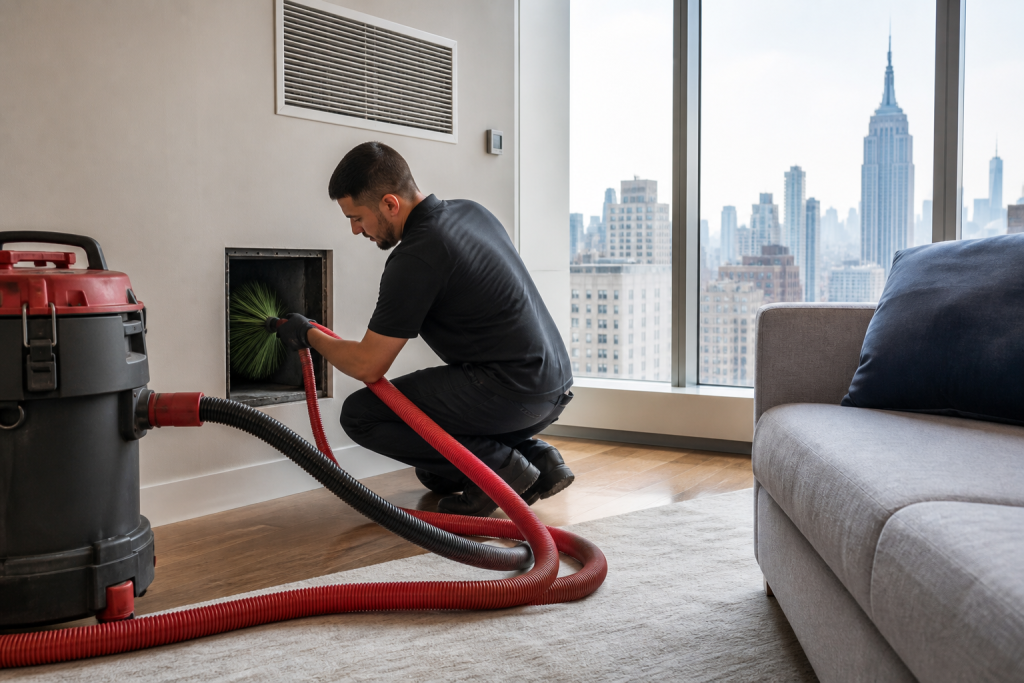
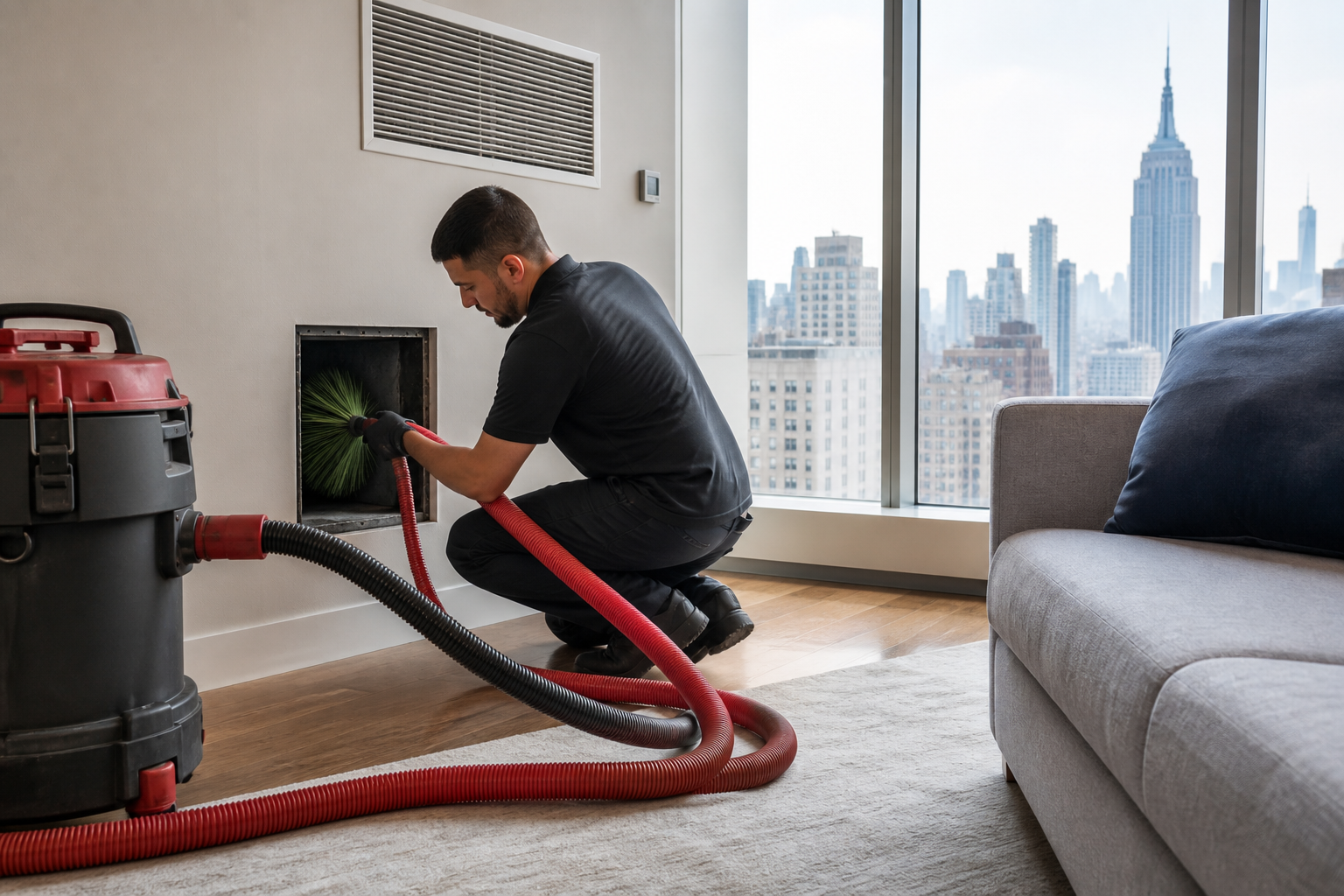
Nikro equipment is professional-grade duct cleaning machinery used by qualified contractors to create negative air pressure and HEPA-filtered containment during residential air duct cleaning. In New York City, where building codes, aging infrastructure, and high-density living create unique indoor air challenges, Nikro systems help remove accumulated debris without redistributing it into your living space. If you’re evaluating contractors and want to know whether their Nikro setup is legitimate or just window dressing, this guide will show you what to look for — or you can call us at (877) 542-5983 for a free estimate.
Here’s a mistake we see constantly: a homeowner hires a “duct cleaner” because the contractor name-drops Nikro, Rotobrush, or another recognized brand. But when we inspect systems after these jobs — especially in pre-war buildings in Manhattan and the tighter duct runs common in Brooklyn brownstones — we find compressed debris, damaged flex duct, and in one case over in Astoria last month, a Nikro machine sitting in the truck while the crew ran a basic shop vac through the registers. The brand on the equipment means very little if the operator doesn’t understand building-specific airflow dynamics.
What Nikro Equipment Actually Does (And Why the Specs Matter)
Nikro manufactures both portable and truck-mounted negative air machines designed specifically for HVAC cleaning and asbestos abatement. The core technology isn’t complicated, but the execution matters enormously in New York City’s varied housing stock.
Here’s what the equipment does mechanically:
- Negative air pressure containment: The machine draws air out of your duct system faster than it’s being introduced, creating a vacuum that prevents dislodged debris from escaping into your rooms. In a typical NYC apartment with shared ventilation pathways, this containment function is critical.
- High CFM airflow: Nikro’s portable units range from roughly 500 to 2,000 CFM (cubic feet per minute). For residential duct systems in New York City — which often run smaller diameter than suburban homes due to space constraints — you need matched CFM, not maximum CFM. Too much pressure can damage aging galvanized ductwork or separate taped joints.
- Multi-stage HEPA filtration: True HEPA captures 99.97% of particles at 0.3 microns. In New York City, where outdoor particulate matter from traffic and construction routinely infiltrates buildings, this filtration level matters for what gets exhausted back into your space — or your neighbor’s.
The equipment brand tells you the contractor made a capital investment. It tells you nothing about whether they calibrate CFM to your specific duct diameter, whether they seal off returns properly, or whether they understand that a 1920s co-op in Gramercy Park has fundamentally different duct characteristics than a 2005 condo in Long Island City.
Nikro Used Correctly vs. Nikro as Window Dressing
We’ve been running Empire Air Duct Cleaning Service New York home for 11 years, and Steven runs every job himself. Here’s how to tell the difference between a contractor who actually operates Nikro equipment and one who owns it for credibility:
Correct operation looks like this:
- Pre-inspection with camera or scope to assess duct condition, material type, and contamination level
- Sealed access points — every return and supply register gets blocked except the active cleaning zone
- Matched agitation method — rotary brushes for metal duct, softer whips or compressed air for flex duct or fiberglass-lined systems
- Progressive zone cleaning, not a single pass through the whole system
- Post-cleaning verification, whether visual or with before/after photography
Window dressing looks like this:
- Machine running in the basement while basic suction happens at registers
- No access panel cutting or sealed containment — just a hose poked into the nearest opening
- Single-pass “blow and go” with no agitation of debris adhered to duct walls
- No discussion of your specific building type, duct material, or contamination source
In our experience across all five boroughs, the low-bid contractors who advertise “professional equipment” most aggressively are often the ones who skip the process steps that equipment is designed to support. The machine becomes marketing, not methodology.
HEPA Filtration and NYC’s Specific Indoor Air Quality Challenges
New York City’s outdoor air quality — while improved from decades past — still presents genuine indoor infiltration challenges. PM2.5 from traffic, residual construction dust, and seasonal pollen all find their way into building ventilation systems. Nikro’s HEPA filtration captures these particles during the cleaning process, but it’s important to understand what HEPA does and doesn’t mean for your home.
What Nikro HEPA filtration captures during duct cleaning:
- Dislodged dust, skin cells, and fiber accumulation from duct walls
- Mold spores if present in the system (though HEPA doesn’t kill mold — that’s a separate remediation question)
- Construction debris and settled particulate common in NYC’s older buildings
What it doesn’t do:
- Remove source contamination that’s actively generating new particles (leaky returns pulling attic debris, ongoing moisture problems)
- Replace the need for source control — if your building’s envelope leaks outdoor pollution, filtration manages symptoms, not causes
- Sanitize or deodorize — HEPA is mechanical filtration, not chemical treatment
For customers in New York City who need sanitizing after cleaning, we use Honeywell and Aprilaire compatible treatment systems as a separate process, applied only after mechanical removal is complete. Equipment brand matters here too — the sanitizing step should never be a fogged chemical substitute for actual debris removal.
Five Questions to Ask Any Contractor About Their Nikro Setup
These questions will reveal whether a contractor understands their equipment or just owns it:
- “What CFM will you run, and how do you match it to my duct diameter?” — Vague answers or “whatever the machine’s set at” suggests no calibration. In New York City’s mixed housing stock, we size airflow to the specific system.
- “How many access points will you need to cut, and how do you seal them afterward?” — Proper negative air cleaning requires sealed zone isolation. If they claim they don’t need access panels, they’re not doing negative air properly.
- “What’s your agitation method, and how do you adjust for flex duct versus metal?” — Nikro vacuum power without proper agitation just pulls loose debris. Adhered contamination requires mechanical dislodging with appropriate tools.
- “Can you show me your HEPA filter condition before and after my job?” — A loaded filter that’s never been changed is worse than no filter — it becomes a contamination source. We document this on request.
- “What’s your post-cleaning verification process?” — No process means no accountability. We provide visual documentation and, for Air Duct Cleaning in Gramercy Park and other Manhattan jobs where building management requires it, written completion reports.
Contractors who hesitate, deflect, or answer in generalities are often the same ones whose “Nikro-equipped” service is fundamentally a vacuum-and-brush routine with expensive branding.
Why Equipment Brand Is the Third Thing to Evaluate
After 11 years and nearly 1,000 customer reviews, our consistent observation is this: homeowners fixate on equipment brands because they’re visible and verifiable. But the actual quality hierarchy runs differently.
First: Scope of work clarity
Does the contractor define exactly what’s included — supply ducts, return ducts, trunk lines, registers, HVAC cabinet? Or do they quote a flat “whole house” price without inspection? In New York City, where systems vary enormously even within the same building, undefined scope is the leading cause of customer disappointment.
Second: Technician experience and accountability
At Empire, Steven runs the job himself — the person who quotes your service is the same expert running the equipment. This matters because duct cleaning isn’t automated; it’s a series of judgment calls about pressure, agitation intensity, and when a section is actually clean versus just “done.” With generalist HVAC companies that subcontract duct cleaning, or budget operators who send different crews daily, that accumulated judgment doesn’t exist.
Third: Equipment appropriateness
Only after scope and technician quality should you evaluate whether Nikro, Rotobrush, or another system is right for your job. We use Rotobrush and Nikro systems because we’ve validated their performance across New York City’s building types — but the brands serve the process, not the other way around.
When to call a pro: If you’re experiencing persistent dust accumulation, musty odors from vents, or visible debris at registers — especially after renovation work — professional evaluation is warranted. Don’t attempt to access or clean ductwork yourself; sheet metal edges can cause serious lacerations, and disturbing mold-contaminated materials without containment creates health risks.
Related services in New York City: Empire also provides Dryer Vent Cleaning in Gramercy Park and HVAC Cleaning in Gramercy Park, with full five-borough coverage for all services.
The Bottom Line
Nikro equipment is legitimate professional-grade machinery for air duct cleaning, but the brand name alone guarantees nothing. In New York City’s demanding building environment — with its pre-war construction, mixed duct materials, shared ventilation in multi-unit buildings, and elevated outdoor particulate loads — the technician’s judgment and process discipline matter more than any equipment specification sheet.
Key takeaways:
- Nikro creates negative air pressure and HEPA containment — functions that are essential but require proper operation to be effective
- Ask specific questions about CFM matching, access panel strategy, and agitation methods to distinguish real operators from brand-name renters
- HEPA filtration captures dislodged debris during cleaning but doesn’t sanitize or solve source contamination problems
- Evaluate scope of work and technician accountability before equipment brand — the best machine with poor technique produces poor results
- New York City’s building diversity demands building-specific expertise, not one-size-fits-all equipment settings
If you’re in New York City and want your duct system evaluated by a technician who actually operates the equipment — not a salesperson who drops off a crew — Empire Air Duct Cleaning Service New York offers free estimates. Call (877) 542-5983 and you’ll speak directly with Steven about your building’s specific needs.
Frequently Asked Questions
They’re different tools for different applications, not direct competitors. Nikro excels at negative air containment and high-volume extraction, while Rotobrush systems specialize in rotary brush agitation with integrated vacuum. We use both — Rotobrush for mechanical agitation in metal duct systems, Nikro for negative air containment in jobs requiring stricter isolation. The “better” question depends on your specific duct material, contamination type, and building configuration. Call (877) 542-5983 for a free assessment of which approach fits your New York City home.
Typical residential duct cleaning in New York City ranges from $400 to $900 for a standard apartment or townhouse system, with larger homes, commercial spaces, or jobs requiring access panel installation running higher. The equipment brand doesn’t drive pricing — scope of work, duct accessibility, and contamination level do. Be wary of quotes under $300; in our experience, these often indicate incomplete scope or untrained labor regardless of what equipment is claimed. We provide upfront, itemized quotes with no hidden fees — call for an exact estimate.
Yes, with observation and follow-up questions. During the job, you should see sealed registers, hear sustained machine operation (not intermittent), and notice access panels being cut and properly closed. Afterward, ask to see the HEPA filter loading — a genuinely used filter will show visible particulate accumulation. Request before/after photos from inside the ductwork. If the contractor resists any of this transparency, that’s more telling than any equipment brand claim. We’ve documented our process for hundreds of New York City customers over 11 years — documentation should be standard, not exceptional.
No — Nikro equipment mechanically removes dislodged debris and contains it via HEPA filtration, but it doesn’t kill or eliminate mold growth. If you have active mold contamination, you need assessment by a specialist to determine source moisture, remediation scope, and whether the duct material itself requires replacement. We encounter this regularly in New York City’s humid summer months, especially in buildings with envelope leaks or inadequate return insulation. We can evaluate whether you’re dealing with surface debris or active biological growth, and recommend appropriate next steps. Call (877) 542-5983 for an honest assessment — we won’t sell you cleaning for a problem that needs remediation.
Written by Steven Ramirez, Owner & Lead Technician at Empire Air Duct Cleaning Service New York, serving New York City since 2015.
Need Air Duct Cleaning Help?
Call Empire Air Duct Cleaning Service New York — licensed & insured, available 24/7 in New York.
(877) 542-5983