
Is Air Duct Cleaning Worth It in New York? The Honest Answer Depends on What’s Actually in Your Ducts
Air duct cleaning is worth it when there’s a specific problem to solve—visible mold, post-renovation debris, or confirmed pest contamination—and often unnecessary when your system is clean with no trigger event. In New York City, the calculation shifts dramatically because our buildings, climate, and housing stock create conditions that suburban homeowners simply don’t face. If you’re dealing with construction dust from a neighbor’s gut renovation, water damage from an upstairs unit, or the biological debris that comes with roach and rodent activity in pre-war buildings, cleaning isn’t just worth it—it’s essential. Call us at (877) 542-5983 and we’ll tell you honestly whether your situation warrants it.
Why the EPA’s “No Proven Health Benefit” Caveat Doesn’t Tell the Whole Story for New Yorkers
The Environmental Protection Agency’s well-known guidance—that routine duct cleaning hasn’t been proven to prevent health problems—was written for generic, maintenance-style cleanings in typical suburban homes. It wasn’t written for the third-floor walk-up in Astoria where the tenant two floors up just completed a six-month gut renovation, sending plaster dust and silica particles through shared duct chases. It wasn’t written for the Washington Heights co-op where a radiator leak in 4B created a humid environment inside the wall cavity that now feeds mold colonies ten feet from your supply register.
Steven Ramirez, our owner and lead technician, grew up in Jackson Heights watching his uncle work HVAC jobs across all five boroughs. He trained at Queensborough Community College before going independent, and in eleven years of running Empire, he’s learned to read New York buildings the way a good plumber reads old pipe. The EPA’s guidance assumes a level of building isolation and environmental control that simply doesn’t exist in much of New York’s housing stock.
Here’s what changes the math in our city:
- Shared duct systems in multi-family buildings — Unlike single-family homes with dedicated HVAC, many New York apartments share supply and return pathways. Your air quality is only as good as your neighbor’s construction practices.
- Pre-war construction with decades of accumulation — Buildings from the 1920s through 1950s in neighborhoods like Inwood, Ridgewood, and Crown Heights often have original duct runs that haven’t been inspected since installation.
- Water intrusion from vertical living — A burst pipe on the 14th floor can create mold conditions in duct chases on the 8th floor that no individual tenant could predict or prevent.
- Pest pathways in aging infrastructure — Roach and rodent activity in older buildings leaves biological debris in duct runs that no amount of surface cleaning addresses.
These aren’t theoretical concerns. We see them weekly in buildings from the Upper West Side to Bed-Stuy. The question isn’t whether duct cleaning has universal health benefits—it’s whether your specific building conditions have created a contamination event that cleaning can resolve.
The Three Scenarios Where Duct Cleaning Is Clearly Worth It
After eleven years and nearly a thousand reviews, we’ve learned to separate the jobs that genuinely need doing from the ones that don’t. Here are the three situations where we tell customers, without hesitation, that cleaning is worth the investment.
Visible Mold Growth Inside Hard Surface Ducts
Mold in your ductwork isn’t a “wait and see” situation. If you can see it on the visible portions of your supply registers or if a camera inspection reveals growth on the interior surfaces, cleaning is warranted—and in New York’s humid summer months, it’s urgent. We use Rotobrush rotary systems with HEPA containment to remove mold colonies, followed by air sanitizing with Abatement Technologies equipment to address residual spores. This isn’t cosmetic. Mold in ducts distributes spores every time your system cycles, and in a city where many of us keep windows closed for months at a time, that concentration builds.
Post-Renovation Dust and Debris
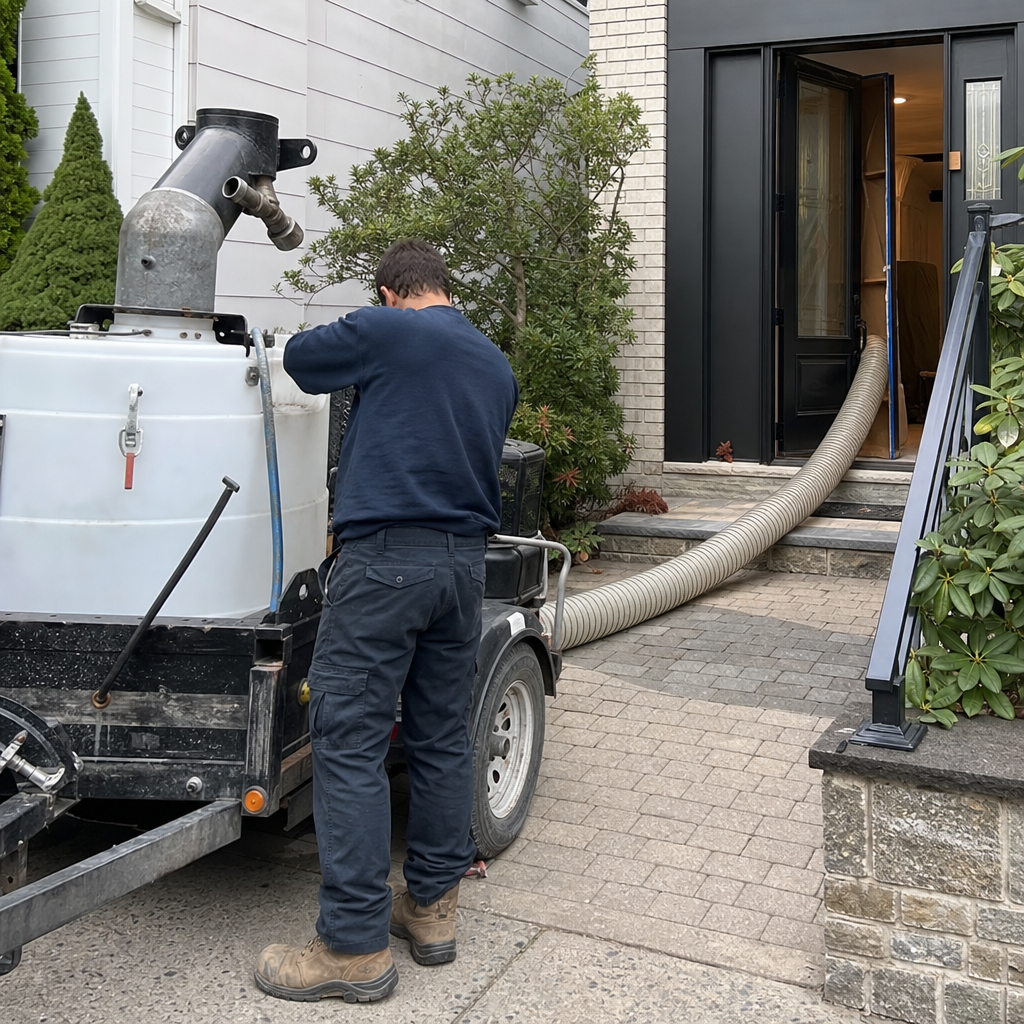
New York renovates constantly. The apartment above you, the unit next door, the building across the air shaft—construction creates particulate matter that finds its way into shared systems. We’ve cleaned ducts in Park Slope brownstones where a neighbor’s kitchen gut sent plaster dust through party-wall chases, and in Financial District high-rises where floor-by-floor renovations created a cascade of silica particles through central returns. The debris isn’t just dust—it’s often construction material that your HVAC system was never designed to filter. Our Nikro vacuum systems, combined with rotary brush agitation, remove material that standard filters can’t touch.
Confirmed Pest Infiltration
This is the one customers hesitate to mention, but we see it constantly in older buildings. Roaches and rodents use duct runs as highways, and they leave behind droppings, dander, and in unfortunate cases, remains. The biological load isn’t just unpleasant—it’s a genuine indoor air quality concern, particularly for immunocompromised residents or families with young children. We don’t sanitize blindly; we inspect first with camera systems to map the contamination, then clean and treat with Guardsman-grade solutions where appropriate.
The One Scenario Where Cleaning Genuinely Isn’t Worth It
Here’s where our candor has earned us 982 reviews at 4.9 stars: sometimes we tell people not to hire us.
If your duct system is relatively new, shows no visible contamination, and hasn’t experienced any of the trigger events above, routine “preventive” cleaning is probably a waste of money. The EPA got this part right. We’ve inspected systems in newer Midtown condos where the ducts were essentially clean, and we’ve told the owners exactly that. They call us back when something changes, and they recommend us to neighbors because we didn’t sell them something they didn’t need.
That honesty is easier when you’re owner-operated. Steven runs every job himself, so the person making the assessment is the same person whose reputation is on the line. There’s no commission structure pushing unnecessary work, no subcontracted crew working from a script. When we say your ducts don’t need cleaning, it’s because they don’t.
What a Camera Inspection Actually Reveals — And Why Who’s Holding the Camera Matters
We inspect before we quote. Every time. Using video borescope cameras, we feed footage through your register openings and map what we’re dealing with: dust accumulation depth, mold presence, construction debris, pest activity, or—sometimes—a system that’s genuinely clean.
The critical difference isn’t the equipment. It’s who’s interpreting the footage.
A subcontractor working their third week on the job might see “some dust” where Steven sees the specific gray, fibrous accumulation pattern that indicates deteriorating flex duct. He might see “a little debris” where we recognize the crushed plaster and joint compound that signals a recent renovation breach. After eleven years of looking exclusively at New York duct systems—pre-war co-ops in Riverdale, post-war high-rises in Kips Bay, brownstone conversions in Fort Greene—Steven has a reference library that no generalist HVAC technician can match.
That interpretive skill changes the “worth it” calculation. A generic company might quote you a standard cleaning for “dirty ducts.” We’ll tell you whether what we’re seeing actually affects your air quality, whether it requires full cleaning or spot remediation, and whether the underlying cause (a disconnected duct, a failed seal, a building-level issue) needs addressing first.
The “Worth It” Calculus: Renting vs. Owning in New York’s Market
Your housing situation changes how you should think about duct cleaning.
If you’re paying $3,500 a month for a rental in a pre-war building, you control the air quality of your unit but not the building’s infrastructure. Shared systems mean your neighbor’s problems become yours. In this scenario, duct cleaning is worth it as a targeted intervention when you have a specific contamination event—but it’s also worth understanding your rights. Document the problem, notify your landlord in writing, and consider whether the building-level system needs attention beyond your unit.
If you own a co-op, you’re in a different position. You’re responsible for your unit’s ductwork, but you’re also part of a building community that shares major systems. Cleaning your individual ducts makes sense when there’s a localized problem, but persistent building-wide issues may require board-level action. We’ve consulted with co-op boards in Brooklyn and Queens about building-wide duct assessment strategies, and we’re happy to provide documentation that helps owners make the case.
In either case, the $200–$500 cost of a proper cleaning (typical for a one-to-two-bedroom apartment system) compares favorably to the cost of ignoring a genuine contamination problem: aggravated allergies, persistent respiratory irritation, or in the case of mold, a problem that spreads and becomes structurally expensive.
What Professional Duct Cleaning Actually Costs in New York
Pricing varies by system size, accessibility, and contamination level, but here’s what we typically see in the New York market:
| Service Scope | Typical Range | What Affects Price |
|---|---|---|
| Standard residential duct cleaning (1-2 BR apartment) | $200 – $400 | Number of registers, system accessibility, contamination level |
| Larger apartment or small brownstone (3-4 BR equivalent) | $350 – $600 | Additional duct runs, multiple return systems |
| Post-renovation or heavy contamination cleaning | $400 – $800 | Extended labor, HEPA containment, debris volume |
| Mold remediation with sanitizing | $500 – $1,200 | Extent of growth, access requirements, post-treatment verification |
| Dryer vent cleaning (often bundled) | $100 – $250 | Run length, number of bends, exterior access |
We provide upfront quotes after inspection—no surprises, no upsells. Our Air Duct Cleaning page details our full process, and we’re transparent about when additional services like our Aprilaire-powered air sanitizing make sense versus when basic cleaning is sufficient.
Why Empire’s Single-Service Focus Changes the Recommendation
Most HVAC companies treat duct cleaning as an add-on—a shoulder-season filler between heating and cooling calls. Their technicians are generalists, and their equipment is often consumer-grade shop vacuums with brush attachments.
We’ve done one thing for eleven years. We own Rotobrush and Nikro systems—the same rotary-brush and vacuum technology used by commercial and industrial contractors, not the hardware-store variants. We maintain Honeywell and Abatement Technologies sanitizing equipment for situations that require it. When Steven tells you your ducts need cleaning, it’s because he’s seen enough systems to know what genuine contamination looks like. When he tells you they don’t, it’s because his business doesn’t depend on selling you services you don’t need.
That focus is why we can offer something rare in this industry: a no-pressure assessment where “no” is a possible outcome. Clean ducts aren’t a luxury — they’re just what the air in your home deserves. But only when your ducts actually need cleaning.
Key Takeaways
- Duct cleaning is worth it for specific, identifiable problems—mold, post-renovation debris, pest contamination—not as routine maintenance
- New York’s building stock and density create unique contamination pathways that suburban-focused EPA guidance doesn’t fully address
- Camera inspection by an experienced technician changes the “worth it” calculation from guesswork to evidence
- Renters and owners face different considerations in shared-building environments
- Owner-operated, single-service companies can afford honesty that commission-driven generalists cannot
FAQs
It can still be worth it if you have a specific contamination event—post-renovation dust, visible mold, or pest debris—but routine cleaning without a trigger event rarely provides measurable benefit for anyone, allergic or not. We inspect first and tell you honestly whether your system shows conditions that warrant the investment. Call (877) 542-5983 for a no-pressure assessment—estimates are free.
Most one-to-two-bedroom apartment systems run $200–$400 for standard cleaning, with post-renovation or mold-contaminated systems ranging from $400–$800 depending on severity. We provide exact quotes after camera inspection, not ballpark guesses. For a precise estimate on your building, call (877) 542-5983—we’ll schedule a look and give you real numbers.
Yes—this is one of the clearest cases where cleaning is worth it. Shared duct systems in New York multi-family buildings transmit plaster dust, silica particles, and joint compound debris from active renovations. We’ve cleaned systems where neighboring unit construction had loaded ducts with material that standard filters couldn’t capture. If you can smell or see dust increase coinciding with nearby work, inspection is warranted. Call (877) 542-5983 and we’ll check what you’re dealing with.
Look for three things: they inspect before quoting, they can explain what they found in specific terms, and “no” is a possible answer. At Empire, Steven Ramirez runs every job himself and has told hundreds of prospective customers their ducts don’t need cleaning—earning their trust and their referrals. Nearly 1,000 verified reviews document that consistency. If a company always recommends service, always finds “dangerous” conditions, or won’t show you camera footage, that’s your signal. We’re happy to show you exactly what we see; call (877) 542-5983 to schedule.
Ready for an Honest Assessment?
If you’d rather have it looked at, Empire Air Duct Cleaning Service New York offers a no-pressure assessment in New York—call (877) 542-5983. Steven runs the job himself, inspects before quoting, and will tell you straight whether your ducts need cleaning or not. Our home page has more about our full indoor air quality services, and our Air Duct Cleaning in New York page details exactly how we work.
Written by Steven Ramirez, Owner & Lead Technician at Empire Air Duct Cleaning Service New York, serving New York, NY.