
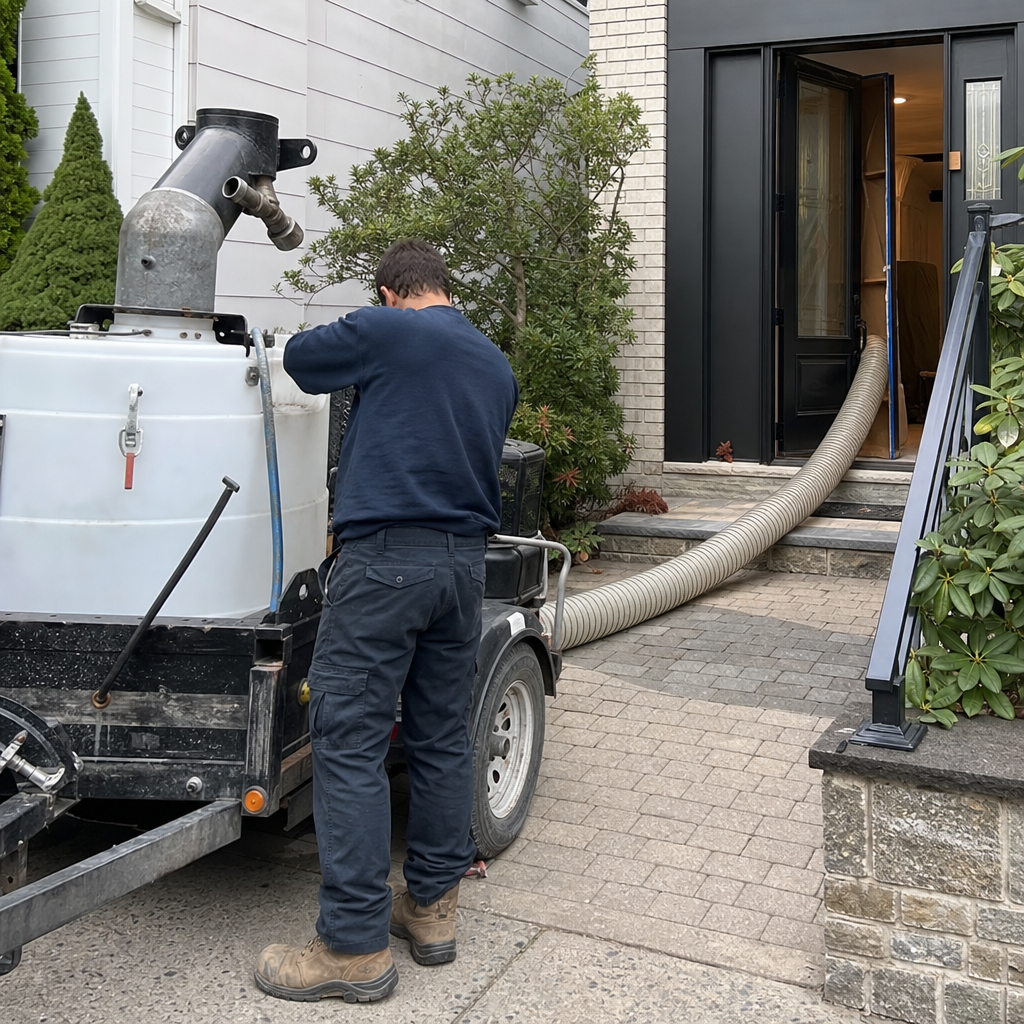
How Often to Clean Air Ducts in New York: A Realistic Guide for NYC’s Unique Housing
Most homes should have air ducts professionally inspected every 2–3 years and cleaned when visible contamination, airflow reduction, or post-renovation debris is present—not on a fixed calendar schedule. In New York City’s multi-family buildings with shared infrastructure, older housing stock, and high renovation turnover, that interval often compresses to 12–18 months depending on building conditions. For a free assessment of your specific system, call Empire Air Duct Cleaning Service New York at (877) 542-5983—we’ll look before we recommend anything.
Steven Ramirez, our owner and lead technician, grew up in Jackson Heights watching his uncle chase HVAC calls across all five boroughs. He learned early that a duct system in a 1920s Jackson Heights co-op behaves nothing like one in a new-build in Florida. After training in heating and ventilation at Queensborough Community College and eleven years running Empire, he’s cleaned ducts in pre-war Park Avenue buildings, post-war Queens conversions, and everything between. The “every 3–5 years” rule you’ll find online? That was written for detached suburban homes with dedicated systems, shared walls with nobody, and no subway particulate drifting through open windows.
Why the Generic “3–5 Years” Advice Fails in New York
The National Air Duct Cleaners Association (NADCA) publishes the ACR standard, which is the closest thing our industry has to a uniform guideline. Here’s what most websites miss: NADCA doesn’t actually prescribe a fixed time interval. The ACR standard specifies assessment triggers—visible contamination, debris discharge from supply registers, musty odors, or reduced airflow—not a calendar date. The “3–5 years” shorthand caught on because it’s easy to remember, but it systematically underestimates what happens inside New York’s unique building ecosystem.
Consider a typical Manhattan pre-war building on the Upper West Side. Your upstairs neighbor gut-renovated their kitchen last spring. The contractor ran sawdust and drywall particulate through shared return plenums for six weeks. Your downstairs neighbor keeps three cats, and the dander circulates through a 1960s-era duct conversion that wasn’t designed for modern filtration. The street-level windows face Broadway, pulling in brake dust and subway particulate every time someone opens a window in October. In that environment, waiting five years means you’re breathing three years of accumulated contamination that a suburban homeowner never faces.
Steven’s approach starts with inspection, not a calendar. When we arrive at a job, we run a Rotobrush camera through the main trunk lines before quoting any work. We’ve found systems in Midtown buildings that looked clean at the register but held two inches of compacted debris in the horizontal returns. We’ve also found Park Slope brownstones where the ducts were essentially clean after four years because the owners maintained rigorous filter schedules and hadn’t renovated. The point: you can’t know without looking.
Four NYC-Specific Accelerators That Shorten Cleaning Intervals
After eleven years and nearly a thousand jobs, we’ve identified four factors that consistently accelerate duct contamination in New York beyond what generic guidelines predict:
- Shared building air infrastructure. In co-ops and condos, your unit’s air doesn’t stay in your unit. Return plenums, hall pressurization systems, and poorly sealed fire dampers allow particulate to migrate between floors. When 4B renovates, 3B and 5B breathe the debris.
- High pedestrian and traffic particulate. Street-level units in neighborhoods like Chelsea, the East Village, or along major avenues pull in diesel particulate, brake dust, and subway tunnel airflow. These particles enter through window gaps, poorly sealed facade penetrations, and make-up air intakes that haven’t been maintained since the Giuliani administration.
- Frequent unit renovations in older buildings. New York’s housing stock turns over constantly. A 2019 study by the New York City Department of Buildings showed residential alteration permits averaging over 30,000 annually. Every gut renovation without proper isolation sends construction debris through shared ductwork.
- Rodent and insect activity in pre-war construction. We don’t shy away from what we find. In buildings with chronic roach or mouse issues—common in pre-war construction with porous wall cavities—ducts become highways for allergens, droppings, and debris. We’ve pulled Guardsman-rated HEPA filters that were biologically compromised after eight months, not the rated twelve.
These aren’t hypotheticals. In February 2024, Steven inspected a six-story walk-up in Washington Heights where three units had renovated within eighteen months. The building’s original 1930s ductwork, converted to forced air in the 1970s, contained compacted drywall dust in the main return that measured nearly four inches at its deepest point. The residents on the top floor had no idea why their “allergies” persisted year-round.
Trigger-Based Assessment: What Steven Looks For During Inspection
Rather than defaulting to a fixed interval, we assess four specific conditions that the NADCA ACR standard identifies as actual cleaning triggers. Here’s what that means in practice when Steven runs a Rotobrush inspection camera through your system:
| Condition | What We Observe | Typical NYC Context |
|---|---|---|
| Visible contamination | Dust/debris accumulation on duct surfaces visible to camera | Common in buildings with recent renovations or poor filter maintenance |
| Debris discharge | Particles blowing from supply registers when system runs | Often follows construction without proper isolation |
| Microbial growth | Visible mold or musty odor source in ductwork | Linked to humidity imbalances in older buildings, post-water-damage |
| Airflow restriction | Measured pressure drop across system exceeds design spec | Compaction from fine particulate (street dust, renovation debris) |
The inspection takes twenty to thirty minutes. Steven explains what the camera shows before recommending any service. We’ve walked away from jobs where the ducts were genuinely clean—because our reputation rests on the 982 reviews that got us to 4.9 stars, not on selling unnecessary work. Clean ducts aren’t a luxury — they’re just what the air in your home deserves.
Dryer Vents: A Separate, More Urgent Timeline
We need to distinguish dryer vent cleaning from HVAC duct cleaning—they’re not the same interval, and confusing them creates real fire risk. Air duct cleaning addresses your heating and cooling distribution. Dryer vent cleaning addresses the exhaust path from your clothes dryer to the building exterior.
New York’s multi-story walk-ups create uniquely hazardous dryer vent configurations. Long horizontal runs, multiple elbows, and termination points above reachable height mean lint accumulates faster and is harder to inspect. We’ve cleared dryer vents in Astoria six-story buildings with twenty-foot vertical rises and two ninety-degree turns—configurations that would never pass modern code but persist in grandfathered construction.
For NYC dryer vents, we recommend annual inspection regardless of use frequency. The lint that bypasses the screen builds incrementally, and the restricted airflow creates escalating fire risk. In 2023, FDNY attributed 2,900 fires to dryer lint ignition nationally. New York’s dense housing means a dryer fire doesn’t stay in one unit. Our Nikro high-velocity vacuum and rotary brush system pulls lint from runs that standard shop-vac attachments can’t reach.
What Empire’s Service Includes and What It Costs
When inspection indicates cleaning is warranted, our residential duct cleaning service uses Rotobrush rotary brush systems with HEPA containment—same equipment specified for commercial and industrial contractors, not the portable units some budget operators rent by the day. For air quality sanitizing, we deploy Honeywell and Aprilaire-rated solutions where microbial contamination is present.
Pricing in the New York market reflects building complexity:
- Standard one- to two-bedroom apartment with accessible registers: typically $300–$450
- Three-bedroom or multi-level unit with extended duct runs: $450–$650
- Pre-war buildings with original plaster duct enclosures requiring careful access: add $100–$200
- Dryer vent cleaning as standalone service: $150–$250 depending on run length and termination height
- Combined duct and dryer vent service: 15% reduction from separate pricing
We don’t quote without seeing the system. “Standard” in a 1965 Forest Hills co-op and “standard” in a 2015 Long Island City high-rise are different jobs requiring different access strategies. Steven runs the job himself, so the estimate you receive reflects actual field conditions, not a dispatcher’s guess.
FAQs
If you see dust blowing from supply registers when the system starts, smell mustiness that intensifies when HVAC runs, or have completed any renovation in the past two years, schedule an inspection rather than waiting for a calendar interval. In New York’s shared-building environment, these triggers are more reliable than elapsed time. Call (877) 542-5983 and we’ll assess at no charge.
Repair and sealing is almost always more economical than full replacement in New York’s multi-family buildings, where replacement may require building-wide coordination and asbestos abatement for pre-1980 insulation. Our duct repair and sealing service addresses disconnected joints, compromised flex duct, and seal failures using methods compatible with existing infrastructure. Replacement typically runs 3–4× repair cost and is only necessary when ductwork is physically collapsed or contaminated beyond recovery.
Yes—we coordinate directly with building management and have worked with dozens of New York co-op and condo boards to schedule access to common mechanical rooms, roof fans, and shared plenums. We carry documentation of our Rotobrush and Nikro equipment specifications and our Abatement Technologies HEPA containment protocols for building engineer review. Steven handles this coordination personally; you’re not handed off to an administrative layer.
Most residential jobs in New York apartments complete in three to five hours with minimal disruption—we seal registers during cleaning and protect flooring at access points. Our vacuum systems are HEPA-contained, so debris isn’t redistributed. Steven runs the job himself, so there’s no crew of unfamiliar technicians in your space. We schedule to avoid your building’s quiet hours when possible.
When to Call for Assessment
If you’re navigating the “how often” question for a New York building—whether a pre-war co-op on the Upper East Side, a post-war conversion in Flushing, or a rental in Bed-Stuy—the honest answer is: it depends on what’s actually in your ducts. Generic intervals ignore the accelerators that make this city’s housing unique. Steven’s inspection-first model means you’ll know before you spend anything.
If you’d rather have it looked at, Empire Air Duct Cleaning Service New York offers a no-pressure assessment in New York—call (877) 542-5983 for a free estimate.
Written by Steven Ramirez, Owner & Lead Technician at Empire Air Duct Cleaning Service New York, serving New York, NY.